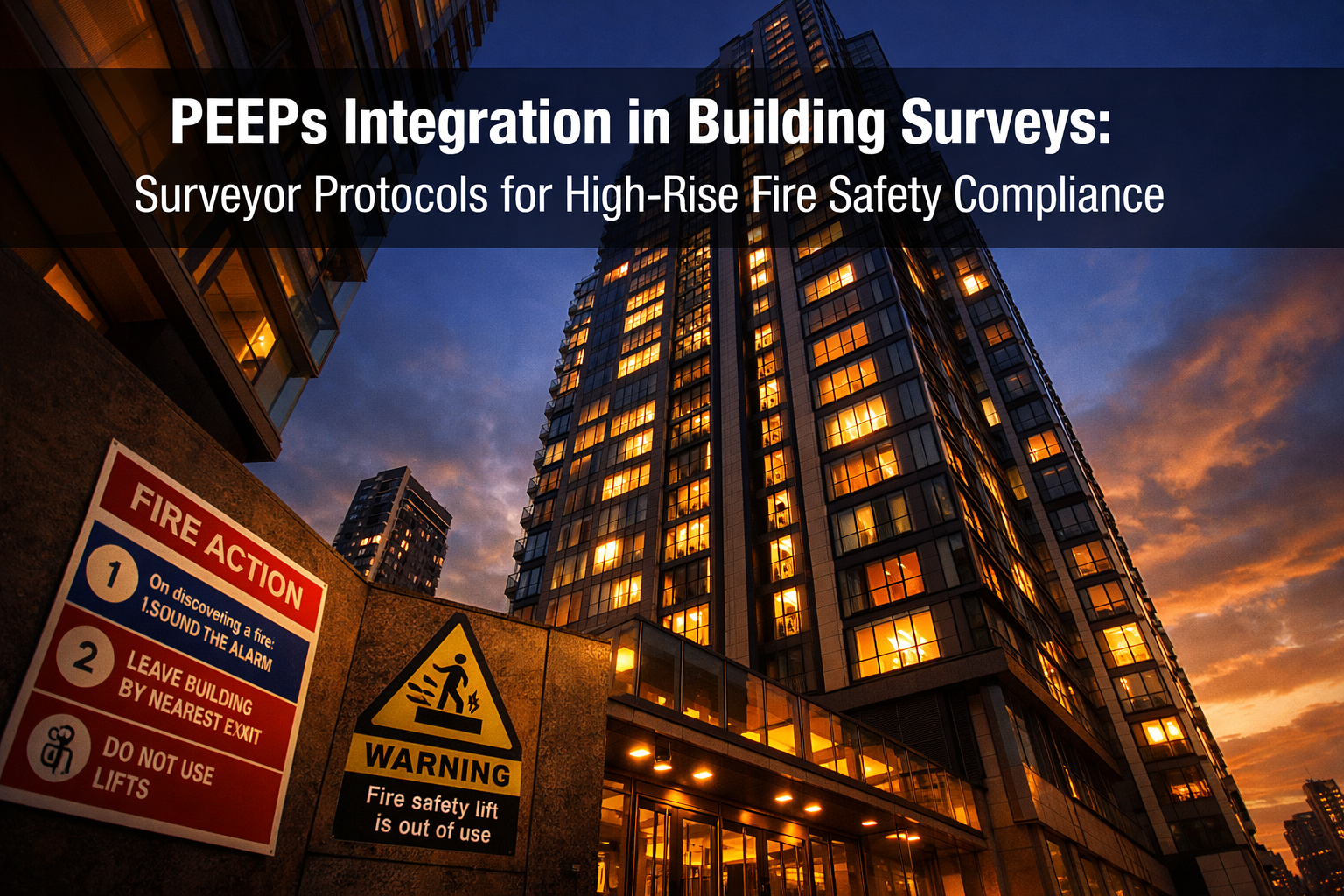

Fewer than 30% of high-rise residential buildings in England had fully documented Personal Emergency Evacuation Plans before April 6, 2026 — the date the Fire Safety (Residential Evacuation Plans) (England) Regulations 2025 came into force. For chartered building surveyors, that gap is no longer a planning problem. It is a live compliance liability.
PEEPs Integration in Building Surveys: Surveyor Protocols for High-Rise Fire Safety Compliance Post-April 2026 Mandate sits at the intersection of regulatory law, professional duty, and property valuation. Surveyors who fail to embed PEEP-related checks into their Level 3 assessments now risk professional negligence claims, delayed transactions, and reputational damage. This article breaks down what the mandate requires, how surveyors should adapt their protocols, and what the downstream valuation impacts look like for private rented sector (PRS) conversions and high-rise residential assets.
Key Takeaways 📋
- The April 2026 regulations require responsible persons in qualifying high-rise buildings to identify vulnerable residents and offer Person-Centred Fire Risk Assessments (PCFRAs).
- Buildings at or above 18 metres (or seven storeys), plus those above 11 metres with simultaneous evacuation strategies, fall within scope. [2]
- Surveyors conducting Level 3 (Building Survey) inspections must now incorporate PEEP compliance checks to meet RICS professional standards and mitigate litigation exposure.
- Non-compliance can materially affect reinstatement valuations, mortgage lending decisions, and PRS conversion feasibility assessments.
- Resident participation in the PEEP process is voluntary — but the offer of assessment is legally mandatory for responsible persons. [2]
What the April 2026 Mandate Actually Requires
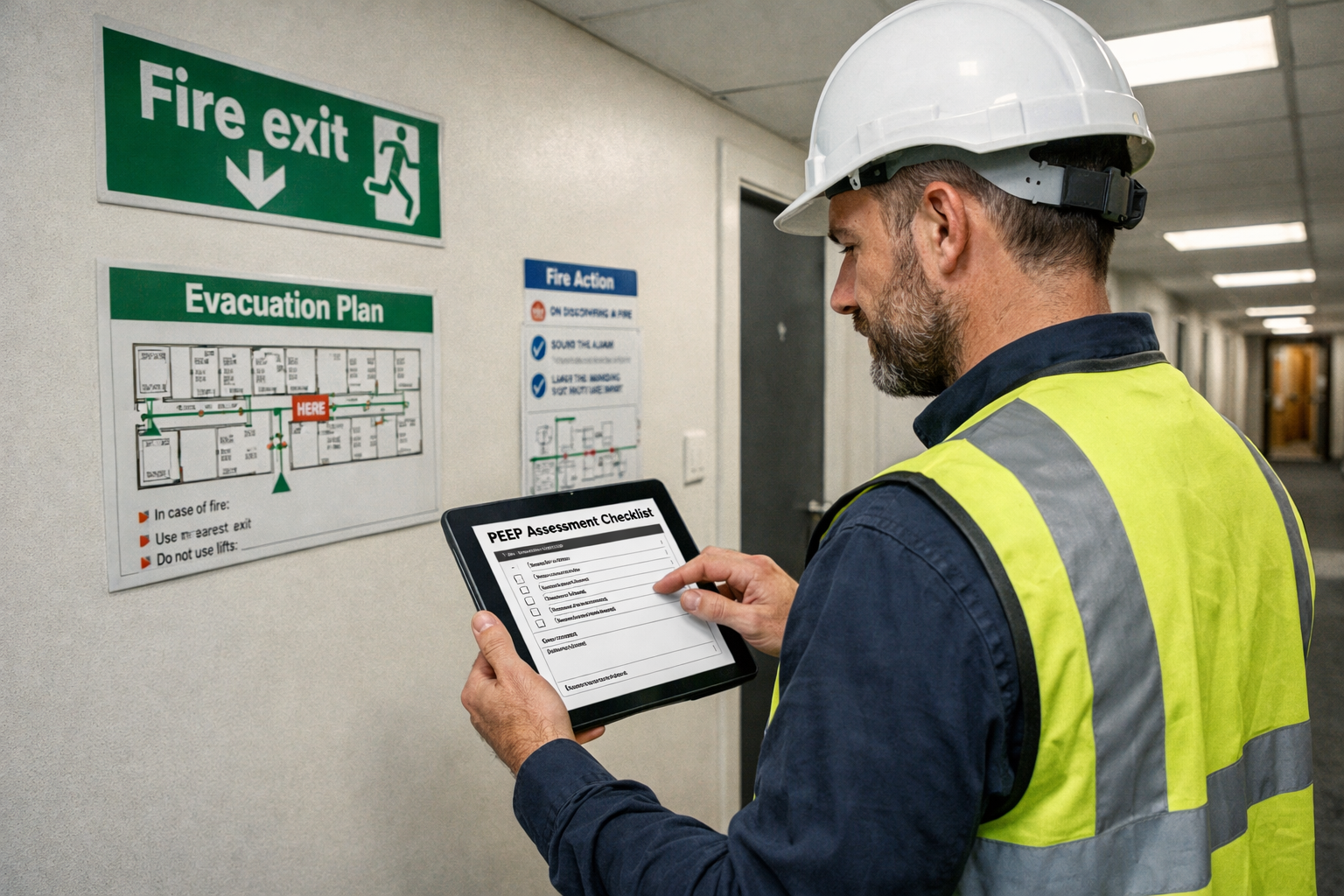
The Fire Safety (Residential Evacuation Plans) (England) Regulations 2025 represent, in the words of legal commentators, "one of the most significant shifts in residential safety since the Grenfell Tower inquiry." [1] They came into force on April 6, 2026, and apply exclusively in England.
Which Buildings Are in Scope?
The regulations apply to residential buildings that meet either of the following criteria [2]:
| Criterion | Threshold |
|---|---|
| Height or storeys | At least 18 metres above ground level or at least 7 storeys |
| Simultaneous evacuation strategy | More than 11 metres in height |
💡 Pull Quote: "The regulations do not just apply to the tallest towers — buildings over 11 metres with simultaneous evacuation strategies are also captured, widening the compliance net considerably."
Who Is the "Responsible Person"?
Under the regulations, the responsible person is typically the building owner, freeholder, or managing agent. Their obligations include:
- Using reasonable endeavours to identify residents who may struggle to evacuate independently due to physical mobility issues, sight or hearing impairment, or cognitive conditions [2]
- Offering a Person-Centred Fire Risk Assessment (PCFRA) to every identified resident
- Preparing a building-wide emergency evacuation plan, reviewed at least every 12 months [2]
Critically, residents cannot be compelled to engage. Participation is voluntary — but the legal duty to identify and offer rests firmly with the responsible person. [2]
What Does a PCFRA Cover?
A PCFRA must include [2]:
- ✅ An assessment of fire risks specific to the resident's impairment or condition
- ✅ Consideration of the resident's ability to evacuate without assistance
- ✅ Review of the individual premises in relation to those risks
Future primary legislation is expected to extend the PCFRA scope to include fire safety risks within the domestic premises itself — though this is not yet mandated. [2]
Surveyor Protocols: Embedding PEEPs Integration in Building Surveys for High-Rise Fire Safety Compliance
The April 2026 mandate does not directly regulate surveyors — it regulates responsible persons. However, PEEPs Integration in Building Surveys: Surveyor Protocols for High-Rise Fire Safety Compliance Post-April 2026 Mandate has become an urgent professional standard issue. Here is why: a Level 3 Building Survey that overlooks PEEP compliance gaps in a qualifying high-rise is now an incomplete assessment. Courts and professional indemnity insurers are beginning to treat it that way.
Chartered surveyors in London and across England need a structured approach. Below is a recommended RICS-aligned protocol.
Pre-Inspection: Scope Confirmation
Before arriving on site, surveyors should confirm:
- Building height and storey count — does the property fall within the 18m/7-storey or 11m simultaneous evacuation thresholds?
- Tenure type — is it a residential building with two or more domestic premises?
- Existing documentation — request copies of any current fire risk assessment, building emergency evacuation plan, and PEEP records from the responsible person or managing agent.
For commercial building surveys in London that include mixed-use high-rise elements, the same pre-inspection checks apply to the residential portions of the building.
On-Site Inspection Checklist 🔍
During the Level 3 inspection, surveyors should document the following PEEP-related elements:
Structural and Physical Evacuation Infrastructure:
- Condition and accessibility of all escape routes and stairwells
- Presence and operability of evacuation lifts (where installed)
- Width of corridors relative to wheelchair and mobility aid passage
- Signage visibility for residents with visual impairments
- Audible and visual fire alarm systems for residents with hearing impairments
Documentation Review:
- Evidence that a building-wide emergency evacuation plan exists and has been reviewed within the last 12 months [2]
- Records showing the responsible person has used reasonable endeavours to identify relevant residents [2]
- PCFRA records for residents who requested one
Common Area Condition:
- Fire door condition and self-closing mechanisms (critical for simultaneous evacuation strategies)
- Compartmentation integrity — check for breaches in fire-stopping around service penetrations
A structural survey in London for a high-rise asset should now incorporate compartmentation checks as a standard line item, not an optional add-on.
Reporting Standards
The survey report should include a dedicated Fire Safety Compliance section that:
- States clearly whether the building falls within the scope of the April 2026 regulations
- Identifies any observable deficiencies in evacuation infrastructure
- Notes whether PEEP documentation was made available and, if so, its adequacy
- Recommends specialist fire engineering review where deficiencies are found
- Flags any items that require attention before a mortgage lender or investor will proceed
Surveyors should avoid making definitive legal compliance judgements — that is the role of a fire safety specialist. The surveyor's role is to identify, document, and flag material risks.
For buildings where roof-level plant rooms, penthouses, or rooftop terraces form part of the inspection scope, a drone roof survey in London can supplement the Level 3 assessment by capturing evacuation route conditions and roof access points without physical risk to the surveyor.
Valuation Impacts and PRS Conversion Considerations
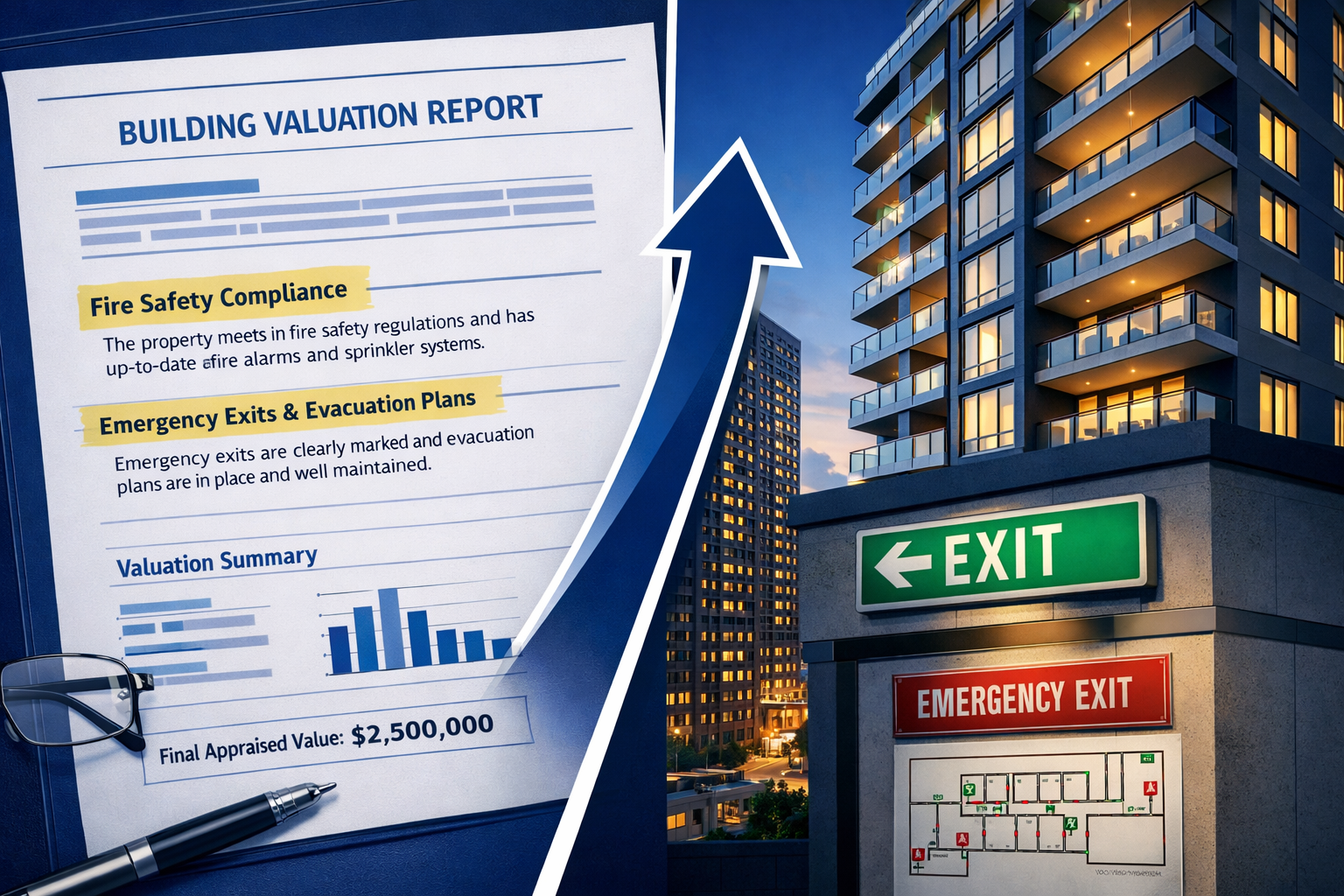
PEEPs Integration in Building Surveys: Surveyor Protocols for High-Rise Fire Safety Compliance Post-April 2026 Mandate is not only a safety and compliance issue — it carries direct financial consequences for asset owners, developers, and investors.
How PEEP Non-Compliance Affects Property Value
A building that cannot demonstrate PEEP compliance faces several valuation headwinds:
| Risk Factor | Valuation Impact |
|---|---|
| Mortgage lender refusal | Reduced buyer pool, downward price pressure |
| Enforcement notices from fire authorities | Deferred income, potential rental voids |
| Insurance premium increases | Higher running costs, reduced net yield |
| Remediation costs | Capital expenditure liability |
| Reputational risk for managing agents | Management contract loss |
Surveyors preparing reinstatement cost valuations for high-rise residential buildings must now factor in the cost of retrofitting evacuation infrastructure — including evacuation alert systems, refuge areas, and accessible signage — as part of the reinstatement cost assessment.
PRS Conversions: A Specific Pressure Point
The private rented sector conversion market in England is particularly exposed. When a building is converted from commercial use to residential (permitted development or full planning), the April 2026 regulations apply from the moment residential occupation begins — not from a deferred compliance date.
Key considerations for PRS conversion surveys include:
- Evacuation strategy type: Does the proposed building use a "stay put" or simultaneous evacuation strategy? Buildings above 11 metres using simultaneous evacuation are in scope even if they fall below the 18-metre threshold. [2]
- Lift provision: Older commercial buildings converted to residential use often lack evacuation lifts. Retrofitting is expensive and structurally complex.
- Corridor and stairwell dimensions: Commercial buildings designed for able-bodied office workers may not meet the accessibility standards needed for PEEP-compliant evacuation routes.
- Fire door specification: Converted buildings may require significant fire door upgrades to achieve the compartmentation standards needed for a valid evacuation plan.
A schedule of condition report prepared at the point of conversion acquisition should capture the baseline condition of all these elements, creating a defensible record for both the developer and future responsible persons.
Litigation Risk for Surveyors
The professional indemnity exposure for surveyors who overlook PEEP compliance in qualifying buildings is real and growing. If a surveyor produces a Level 3 report on a high-rise residential building without addressing fire evacuation infrastructure — and a subsequent incident or enforcement action reveals deficiencies that were observable during inspection — the surveyor may face a negligence claim.
The standard of care expected of a chartered surveyor is that of a reasonably competent professional acting in accordance with current regulatory requirements. Post-April 2026, that standard includes PEEP-related inspection protocols.
Building-Wide Evacuation Plans: The 12-Month Review Obligation
One element of the April 2026 regulations that surveyors frequently encounter in practice is the mandatory 12-month review cycle for building-wide emergency evacuation plans. [2]
When conducting a survey, the date of the most recent evacuation plan review is a material fact. If the plan has not been reviewed within the past 12 months, this constitutes a compliance failure by the responsible person — and it should be flagged in the survey report.
What to look for in an evacuation plan:
- Named responsible person and contact details
- Identified evacuation strategies for each part of the building
- Specific provisions for residents with PCFRAs in place
- Contact information for emergency services
- Date of preparation and most recent review
🔑 Key Point: The regulations require the plan to be reviewed "no later than 12 months after initial preparation and before the end of every subsequent 12-month period." [2] A plan dated more than 12 months ago — with no evidence of review — is a red flag that should appear prominently in the survey report.
Practical RICS-Aligned PEEP Checklist for Surveyors
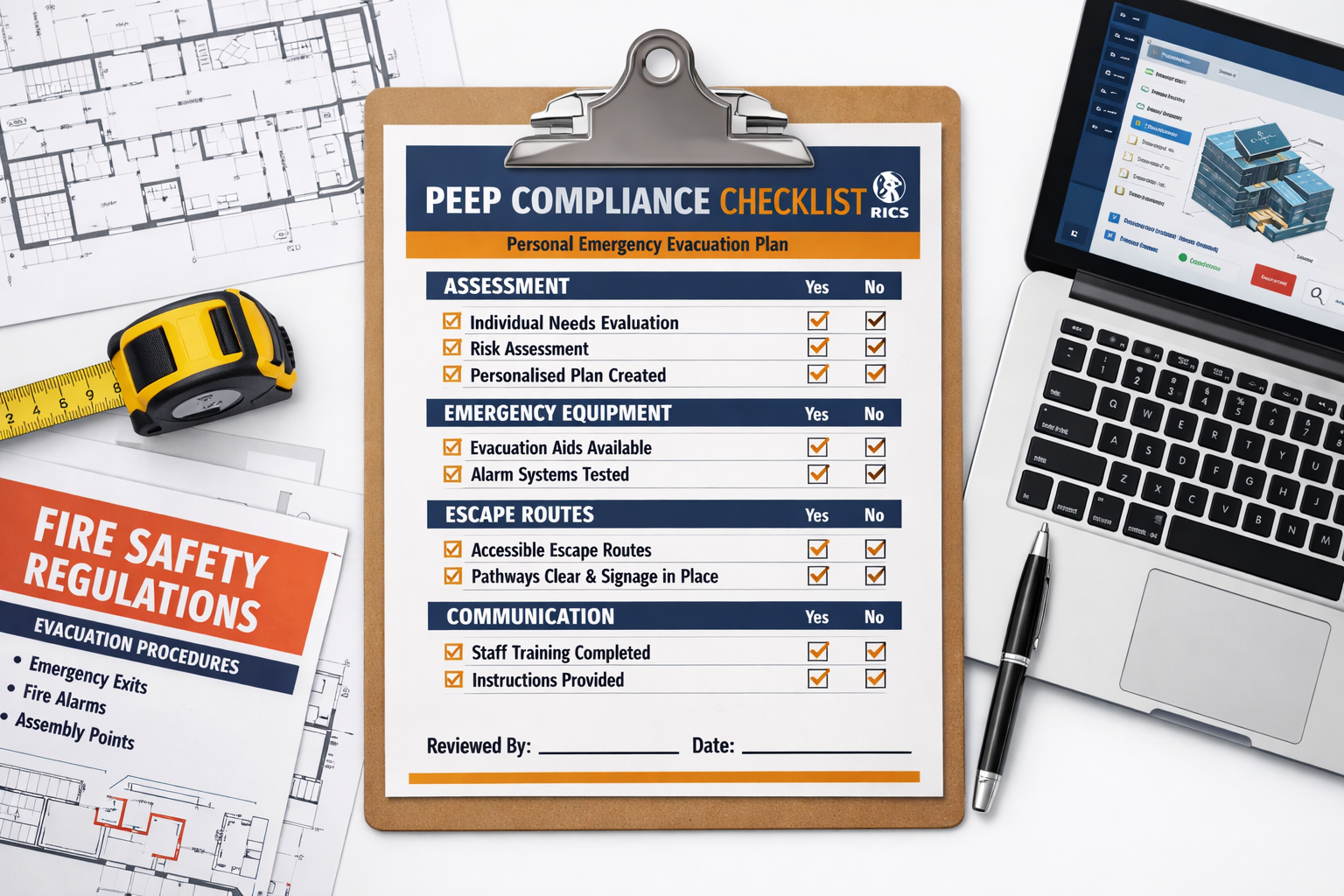
Below is a condensed checklist that surveyors can adapt for Level 3 inspections of qualifying high-rise residential buildings:
Pre-Survey
- Confirm building height/storey count and evacuation strategy type
- Request existing fire risk assessment, evacuation plan, and PEEP records
- Confirm tenure and number of domestic premises
On-Site
- Inspect all escape routes for width, obstruction, and condition
- Check fire door condition, self-closing mechanisms, and intumescent seals
- Assess compartmentation integrity at service penetrations
- Verify evacuation signage visibility (including for visually impaired residents)
- Check fire alarm system includes visual alerts (for hearing-impaired residents)
- Note presence/absence of evacuation lift and its condition
- Review refuge area provision and condition
Documentation
- Record date of most recent emergency evacuation plan review
- Note whether PCFRA records were made available
- Flag any evidence of enforcement notices or outstanding fire authority actions
Report
- Include dedicated Fire Safety Compliance section
- State scope applicability clearly
- Recommend specialist fire engineer review where deficiencies identified
- Quantify remediation cost range where possible (for valuation purposes)
Conclusion: Actionable Next Steps for Surveyors
The April 2026 PEEPs mandate has permanently changed the landscape of high-rise residential surveying in England. PEEPs Integration in Building Surveys: Surveyor Protocols for High-Rise Fire Safety Compliance Post-April 2026 Mandate is no longer a niche specialism — it is a core competency for any surveyor working on qualifying residential assets.
Here are the immediate actions every surveyor should take in 2026:
- Update your standard Level 3 inspection checklist to include all PEEP-related infrastructure and documentation checks outlined above.
- Review your professional indemnity cover with your insurer to confirm it addresses fire safety compliance omissions in high-rise residential surveys.
- Build relationships with fire safety engineers so you can make credible referrals when deficiencies require specialist assessment.
- Educate your clients — particularly managing agents and PRS investors — about the responsible person obligations under the April 2026 regulations. Many are still unaware of the 12-month evacuation plan review requirement. [2]
- Document everything: If a client refuses to provide PEEP documentation during a survey, note that refusal explicitly in your report. It protects you and informs the buyer or lender.
For surveyors operating across London and the South East, the building surveyor services available through experienced chartered practices now need to reflect these updated compliance expectations as a matter of routine — not exception.
The Grenfell Tower inquiry changed the conversation about fire safety in high-rise buildings forever. The April 2026 regulations are the legislative response. Surveyors who adapt now will be better positioned professionally, commercially, and ethically than those who treat PEEP compliance as someone else's problem.
References
[1] Fire Safety Regulations 2026 What Property Managers Need To Know – https://colmancoyle.com/news/fire-safety-regulations-2026-what-property-managers-need-to-know/
[2] Residential Peeps Factsheet – https://www.gov.uk/government/publications/residential-personal-emergency-evacuation-plans-residential-peeps/residential-peeps-factsheet