Last updated: October 20, 2026
Quick Answer
Rightmove's October 2026 House Price Index shows 34% of homes on the market have had at least one asking-price cut, nearly matching the September 2023 peak of 36%. For Kingston upon Thames, where values sit between London and South East averages, this means sellers who price realistically from day one still sell faster, while buyers eyeing reduced homes have real room to negotiate, especially with a RICS survey backing their offer.
Key Takeaways
- Rightmove October 2026 price reductions hit 34% of listings nationally, close to the record 36% seen in September 2023.
- Average asking prices rose 1.0% (£3,575) in the month to £371,015, but remain 0.1% below October 2025.
- Reduced homes took 119 days on average to find a buyer, versus 39 days for homes never reduced.
- Agreed sales are down 8% and buyer enquiries down 9% year-on-year, while new listings are up 3%.
- Rightmove's average 2-year fixed mortgage rate is 5.55%, up from 5.29% last month and 4.25% in February 2026.
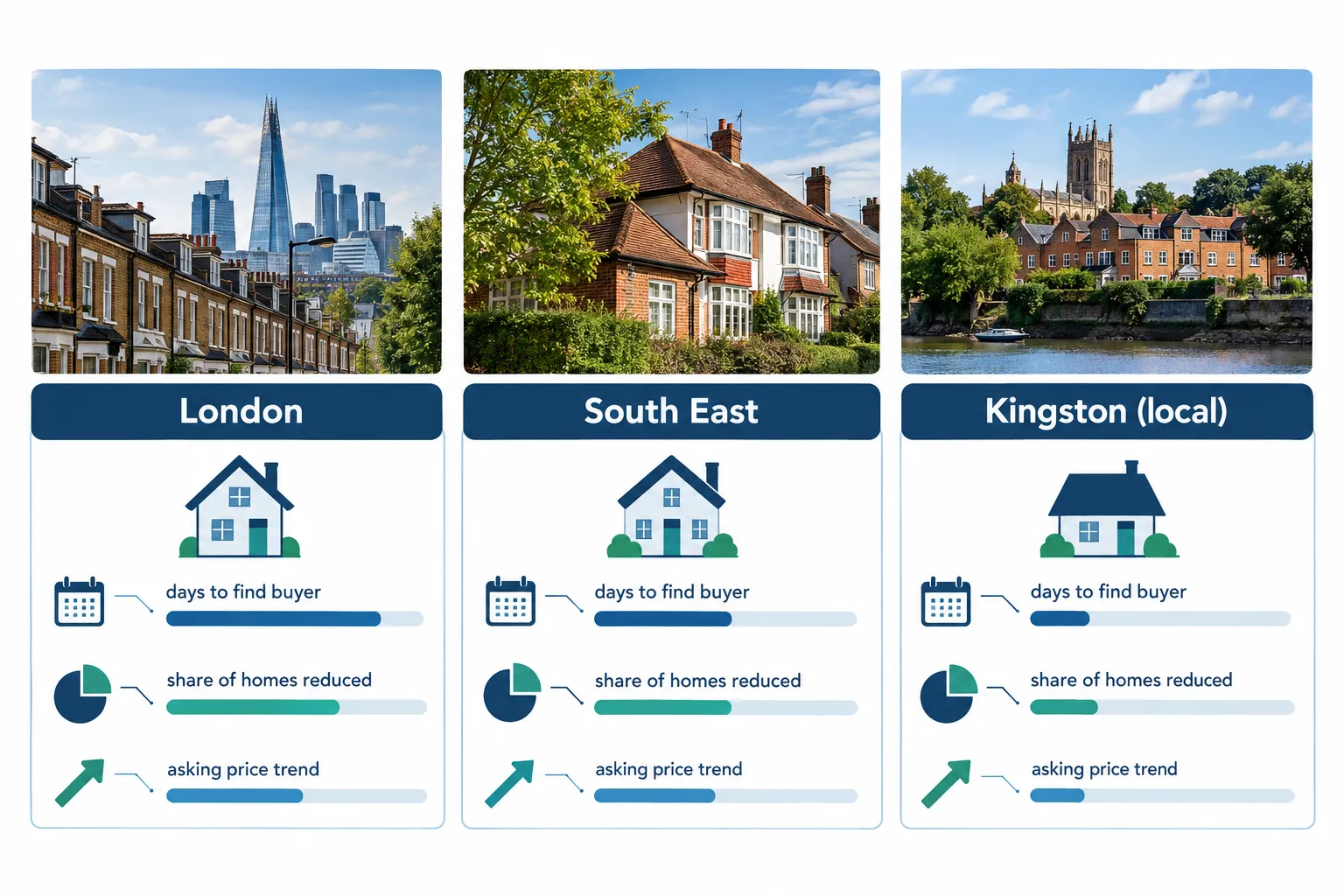
- London asking prices average £673,942 (38% of homes reduced); South East averages £475,582, with Kingston values sitting between the two.
- The Autumn Budget on 28 October 2026 and the Bank of England rate decision on 5 November 2026 are likely to shape buyer confidence into winter.
What Does the Rightmove Price Reduction Index Mean?
Rightmove's price reduction figure tracks the proportion of currently listed homes that have had at least one asking-price cut since first going on the market. A figure of 34%, as recorded in October 2026, means roughly one in three live listings nationally has been reduced from its original asking price.
This is not the same as house prices falling outright. It reflects seller behaviour: how many vendors set an opening price too high and have since corrected it. Rightmove's data shows the average reduction is nearly 7%, about £21,000 off the original asking price. A high reduction rate signals a market where buyers hold more negotiating power and sellers are adjusting expectations to match it.
Decision rule: if you're a seller and your local reduction rate is above 30%, assume buyers will expect to negotiate, and price with that in mind from the outset rather than reacting after weeks of silence.
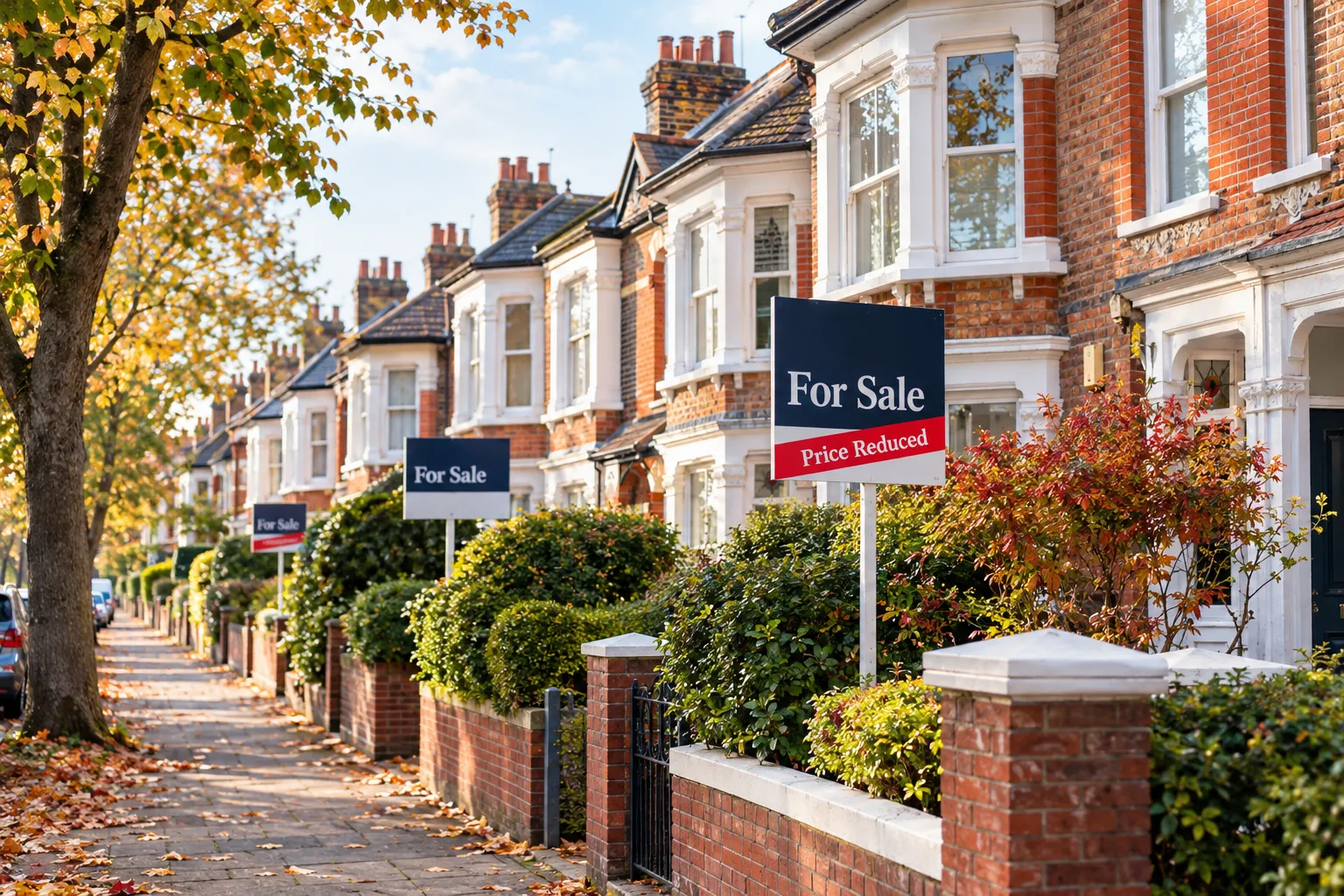
Why Are Kingston House Prices Showing Reductions in October 2026?
Kingston is not an isolated case; it's following a pattern visible across London and the South East, driven by higher mortgage costs and cautious buyer sentiment rather than a Kingston-specific problem. Rightmove's regional data shows London's average asking price rose 2.5% in the month but is still down 1.7% year-on-year, with 38% of London homes reduced. The South East saw a smaller 0.9% monthly rise, down 0.9% annually, with homes taking 74 days to find a buyer.
Kingston typically prices between these two bands, given its river-side position and strong transport links into central London. The same pressures apply locally:
- Higher borrowing costs squeezing what buyers can afford
- Sellers who listed optimistically in spring now accepting market reality
- Buyers taking longer to commit amid Budget and rate uncertainty
There is no single "Kingston" headline figure in this release, but the London/South East blend gives a reasonable guide to what local vendors should expect.
How Much Are Homes Being Reduced By on Average?
Rightmove recorded average price cuts of almost 7%, close to £21,000, with more than 3,000 reductions happening every day in September 2026. That is a meaningful discount, not a token gesture, and it reflects genuine repricing rather than minor tweaks.
For a Kingston home originally listed near the £475,000 to £675,000 range (between the South East and London averages), a 7% cut translates to roughly £33,000 to £47,000 off the original price. Sellers who build in that kind of buffer from the start, rather than cutting later, tend to keep more control over the sale timeline.
Is the Price Reduction Trend Happening Elsewhere Too, or Just Kingston?
This is a national trend, not a Kingston-specific event. Rightmove's figures cover the whole of Great Britain, and the 34% reduction rate is broadly consistent across London and the South East, the two regions that frame Kingston's market.
London's reduction rate (38%) is slightly higher than the national average, while the South East's figures, though not separately broken out for reductions in this release, follow the same direction of travel: slower sales, more negotiation, and asking prices adjusting downward from initial listings. Kingston sellers should expect to be judged against this wider regional backdrop, not against last year's London boom conditions.
Should I Buy Now While Prices Are Being Cut?
Buying now can make sense if finances are stable and a genuinely reduced property suits your needs, but it's worth weighing mortgage costs carefully first. Rightmove's average 2-year fixed rate has climbed to 5.55%, up from 4.25% in February 2026, adding roughly £250 a month to a typical new mortgage.
Before making an offer on a reduced Kingston property, consider:
- Check why it was reduced. A single cut after overpricing is different from multiple cuts suggesting a structural issue (damp, subsidence, lease problems).
- Commission a RICS Level 2 or Level 3 survey. A Level 2 Homebuyer Report suits standard post-1900 houses and flats in reasonable condition; a Level 3 Building Survey suits older, altered, or unusual properties, or anything showing visible defects.
- Get an independent valuation. This supports a negotiating position if the survey reveals issues the asking price hasn't accounted for.
- Factor in the mortgage rate rise. A property that looked affordable in February may cost £250 more a month today.
Common mistake: assuming a reduced asking price is already the floor. Rightmove's data shows reduced homes still take 119 days on average to sell, meaning there's often further room to negotiate, particularly if a survey uncovers repair costs.
Is This a Good Time to Sell With Price Reductions Happening?
It can still be a good time to sell, provided the asking price reflects current market reality rather than spring 2026 or 2025 conditions. Homes priced correctly from the start sold in 39 days on average, compared with 119 days for homes that needed a reduction, nearly three times faster.
The cost of overpricing is not just time. Buyer enquiries are down 9% year-on-year and agreed sales down 8%, so there are fewer buyers chasing each listing. An overpriced home sits longer, accumulates a stale listing history on portals, and often ends up selling for less than it would have if priced correctly at launch.
Edge case: if a Kingston seller must move quickly (job relocation, chain completion deadline), pricing slightly below the recent comparable average, rather than at the top of the range, is more likely to produce a faster, cleaner sale than an ambitious asking price followed by a reduction weeks later.
What's Causing One in Three Homes to Get Price Cuts?
The main driver is a mismatch between seller expectations and what mortgage-constrained buyers can actually afford. Rising borrowing costs, new listings up 3% year-on-year, and falling buyer enquiries have combined to shift negotiating power toward buyers, forcing sellers to correct overambitious asking prices.
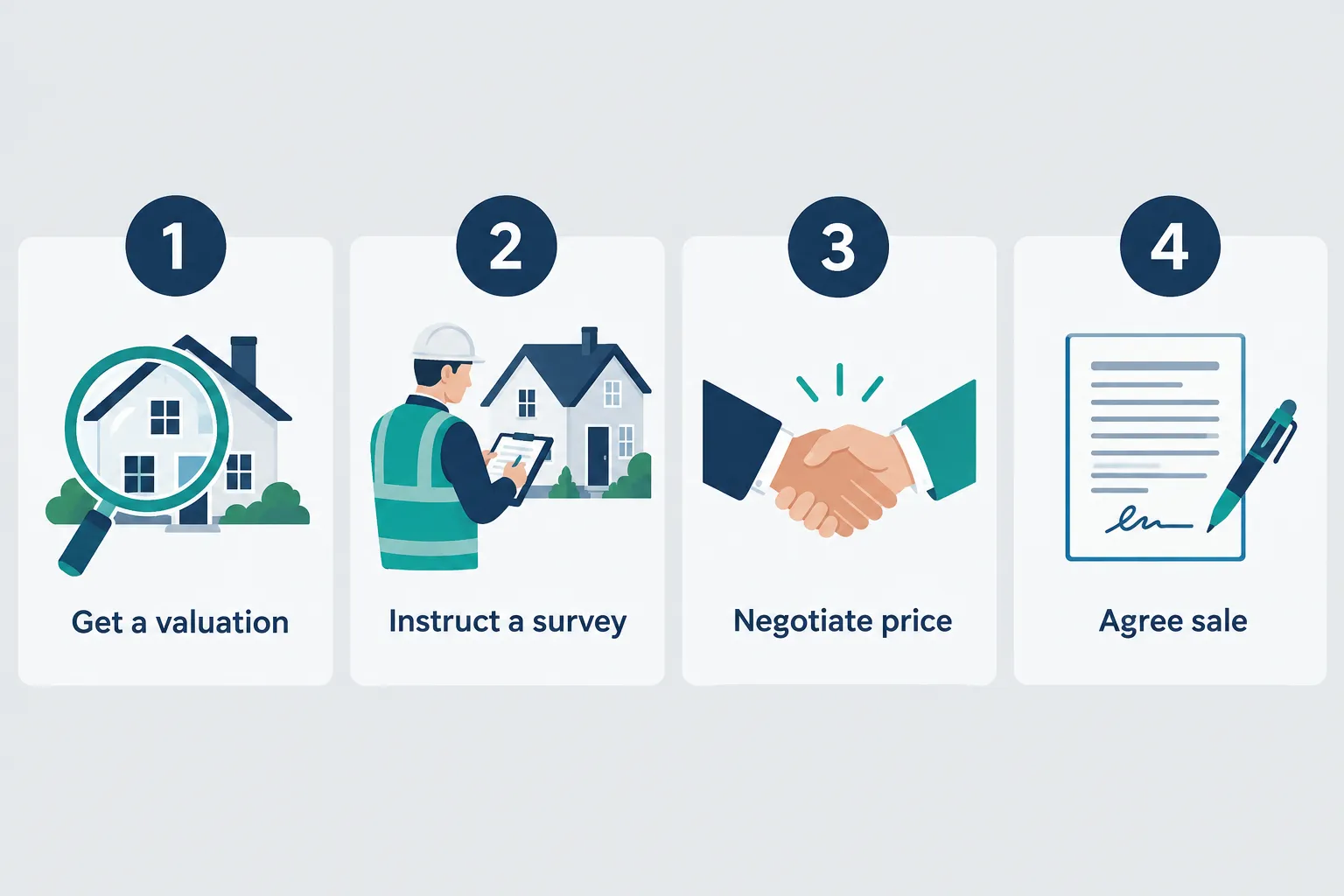
Three forces are compounding:
- Mortgage costs: Rightmove's average 2-year fixed rate rose from 5.29% to 5.55% in a single month.
- Reduced buyer activity: enquiries down 9% on 2025 levels.
- More competition among sellers: listings up 3%, giving buyers more choice and more leverage.
How Long Will Property Prices Keep Dropping?
No index can reliably predict future price direction, and Rightmove's October 2026 release does not forecast beyond current data. Two near-term events are likely to influence sentiment: the Autumn Budget on 28 October 2026 and the Bank of England's rate decision on 5 November 2026.
Both events could affect mortgage pricing and buyer confidence into the new year. Rather than trying to time the market precisely, sellers and buyers are better served by using current, verified data, like this Rightmove release, to set realistic expectations for the next three to six months.
Are Certain Kingston Neighbourhoods Hit Harder Than Others?
Rightmove's October 2026 release does not break figures down to individual Kingston streets or postcodes, so no verified neighbourhood-level claim can be made from this data. What can be said is that Kingston's overall position, between the South East average of £475,582 and the London average of £673,942, reflects its mix of higher-value riverside and town-centre properties alongside more typical South East-style suburban streets.
A local valuation remains the only reliable way to understand how a specific Kingston street or property type is performing, rather than relying on borough-wide or regional averages.
Does a Price Reduction Mean the Market Is Crashing?
No. A high reduction rate reflects seller repricing behaviour, not a collapse in values. Average asking prices are still up 1.0% month-on-month nationally, and only marginally down (0.1%) year-on-year, which is a far cry from a market crash.
What has changed is the balance of power between buyers and sellers. Buyers have more choice and more time, so sellers who ignore that and hold firm on optimistic pricing are the ones who end up needing a reduction later.
Should I Reduce My Listing Price If I'm Selling Right Now?
If a Kingston property has been on the market for more than six to eight weeks with little interest, a price adjustment is usually worth considering, ideally based on a fresh valuation rather than a guess. Waiting too long to act tends to cost more than acting early, since reduced homes still average 119 days to sell even after the cut.
Before reducing, get an updated comparable analysis and consider whether the issue is price, presentation, or access for viewings. A small, well-judged reduction backed by evidence often moves a property faster than a large, reactive cut made out of frustration.
Are Apartments and Houses Being Reduced Equally?
Rightmove's October 2026 release does not provide a verified breakdown by property type, so no specific claim can be made comparing flats and houses. What is confirmed is the overall market pattern: roughly one in three listings nationally have had a reduction, with reduced properties taking three times longer to sell than correctly priced ones, regardless of type.
What This Means for You
For Kingston sellers: price in line with current comparable evidence, not last year's figures or wishful thinking. A RICS valuation before listing helps avoid the 119-day drag that reduced properties experience.
For Kingston buyers: use the current buyer-friendly conditions to negotiate on reduced listings, but always back an offer with a RICS Level 2 or Level 3 survey. Survey findings on condition, damp, structural movement, or lease issues give concrete, evidence-based grounds to negotiate further, beyond the asking-price cut already applied.
For anyone with a mortgage decision pending: the rise from 4.25% to 5.55% on Rightmove's tracked 2-year fix since February 2026 is significant. Factor the Autumn Budget and November Bank of England decision into any timing decisions.
FAQ
What does the 34% price reduction figure actually measure?
It measures the share of currently listed homes on Rightmove that have had at least one asking-price cut since being first listed, not a fall in overall market value.
Is Kingston worse affected than the rest of London?
There's no Kingston-specific reduction figure in Rightmove's October 2026 release. Kingston's prices sit between the London and South East averages, so borough-wide trends broadly apply.
How much should I expect to negotiate off a reduced Kingston property?
Rightmove reports an average national reduction of almost 7%, around £21,000. A RICS survey can justify negotiating further if defects or condition issues are found.
Will the Autumn Budget change house prices?
It's too early to say. The Budget on 28 October 2026 and the Bank of England decision on 5 November 2026 could affect mortgage rates and buyer confidence, but no verified price impact exists yet.
Should I get a Level 2 or Level 3 survey?
A Level 2 Homebuyer Report suits standard, reasonably modern homes in good condition. A Level 3 Building Survey suits older, altered, or visibly defective properties, or anything over roughly 100 years old.
Does a high reduction rate mean I should wait to sell?
Not necessarily. Correctly priced homes still sell in 39 days on average. Waiting doesn't remove the need for realistic pricing; it may only delay the decision.
Conclusion
Rightmove's October 2026 price reductions data tells a clear story: one in three homes are being repriced because initial asking prices outran what mortgage-constrained buyers can afford. Kingston sits in the middle of this picture, between London's steeper falls and the South East's steadier pace.
Sellers should request a current valuation before listing and price against real comparable evidence, not last year's market. Buyers eyeing reduced Kingston properties should pair any negotiation with a RICS Level 2 or Level 3 survey, giving a factual basis to push beyond the headline price cut already applied. With the Autumn Budget and a Bank of England rate decision both landing before November, getting independent, professional advice now, rather than guessing, is the safest way to move forward with confidence.