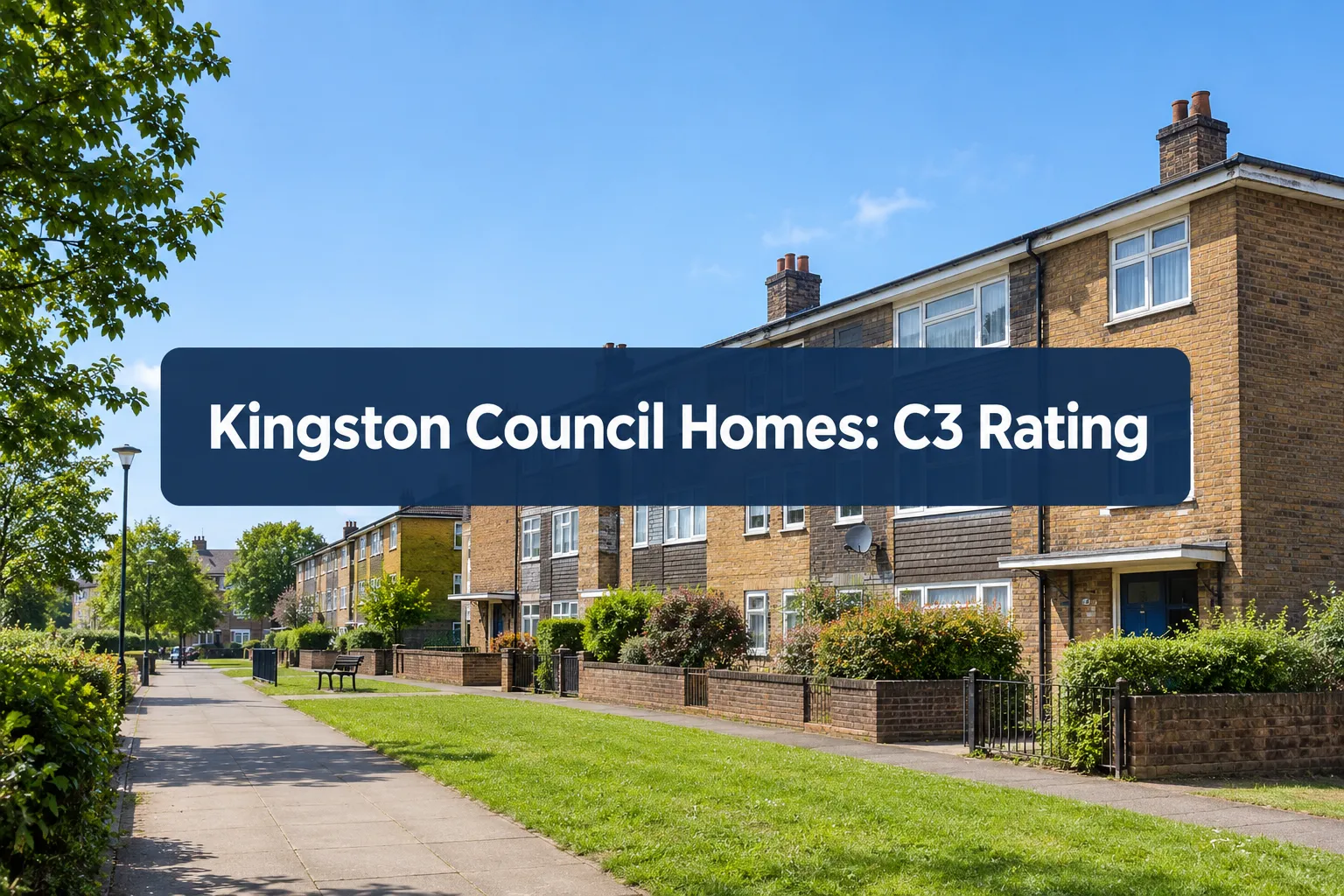
Eighty-five percent. That is the share of Kingston's council housing stock the local authority still cannot fully describe in terms of condition, safety risk, or remaining life of a roof, boiler, or lift. On 14 October 2026, the Regulator of Social Housing confirmed what that gap means in practice: a C3 consumer rating for Kingston Council, its first formal judgement under the updated regime for local-authority landlords. The verdict is blunt, Kingston meets most required standards, but not all, and "significant improvement is needed."
For anyone living in, managing, or buying an ex-council property in the borough, the Kingston council homes stock condition survey shortfall is not a bureaucratic footnote. It is the difference between knowing what you are paying for and guessing.
Key Takeaways
- Kingston Council received a C3 rating from the Regulator of Social Housing in October 2026, meaning important standards are not fully met.
- Only 15% of council homes have been surveyed under the new stock condition programme, leaving inspectors and residents short of accurate data on most properties.
- The council met legal health-and-safety minimums and improved repairs performance, but oversight, communal repairs, and complaints handling remain weak.
- A full stock condition survey is promised within 18 months; no formal enforcement action is currently proposed.
- Leaseholders and buyers of ex-council flats should commission an independent RICS survey rather than rely solely on council data.
What the C3 Rating Actually Says About Kingston
The Regulator of Social Housing assesses landlords against four consumer standards: safety and quality of homes, transparency and accountability, neighbourhood and community standards, and tenancy-related services. A C3 grade sits in the middle of the regulator's scale, not a crisis rating, but a clear warning.
Inspectors found Kingston meets its key legal health-and-safety duties, and repairs performance has genuinely improved, including 100% of emergency repairs completed on time, according to the council's own figures. That is a real achievement worth noting.
But the report also found that "accurate, up-to-date information was unavailable for most properties." Inspectors flagged weaknesses in:
- Oversight of remedial actions after inspections
- Communal area repairs in shared blocks
- Complaints handling and response times
- Identifying and responding to tenants' diverse needs
Angela Holden, the RSH's Director of Regulatory Engagement, put the regulator's approach plainly: "Where we find serious failings, we will engage intensively with landlords." Kingston has not been placed under formal enforcement, but the rating signals the regulator is watching closely. Kirklees Council received an identical C3 grade in the same inspection cycle, suggesting this is a wider pattern among local-authority landlords, not an isolated Kingston problem.
Councillor Emily Davey, Kingston's housing portfolio holder, said the authority is strengthening repairs oversight and speeding up complaint responses. Opposition councillor James Giles of the Kingston Independent Residents Group called the finding a "damning judgement" and has demanded a public improvement plan with firm deadlines.
Why the Kingston Council Homes Stock Condition Survey Gap Matters So Much
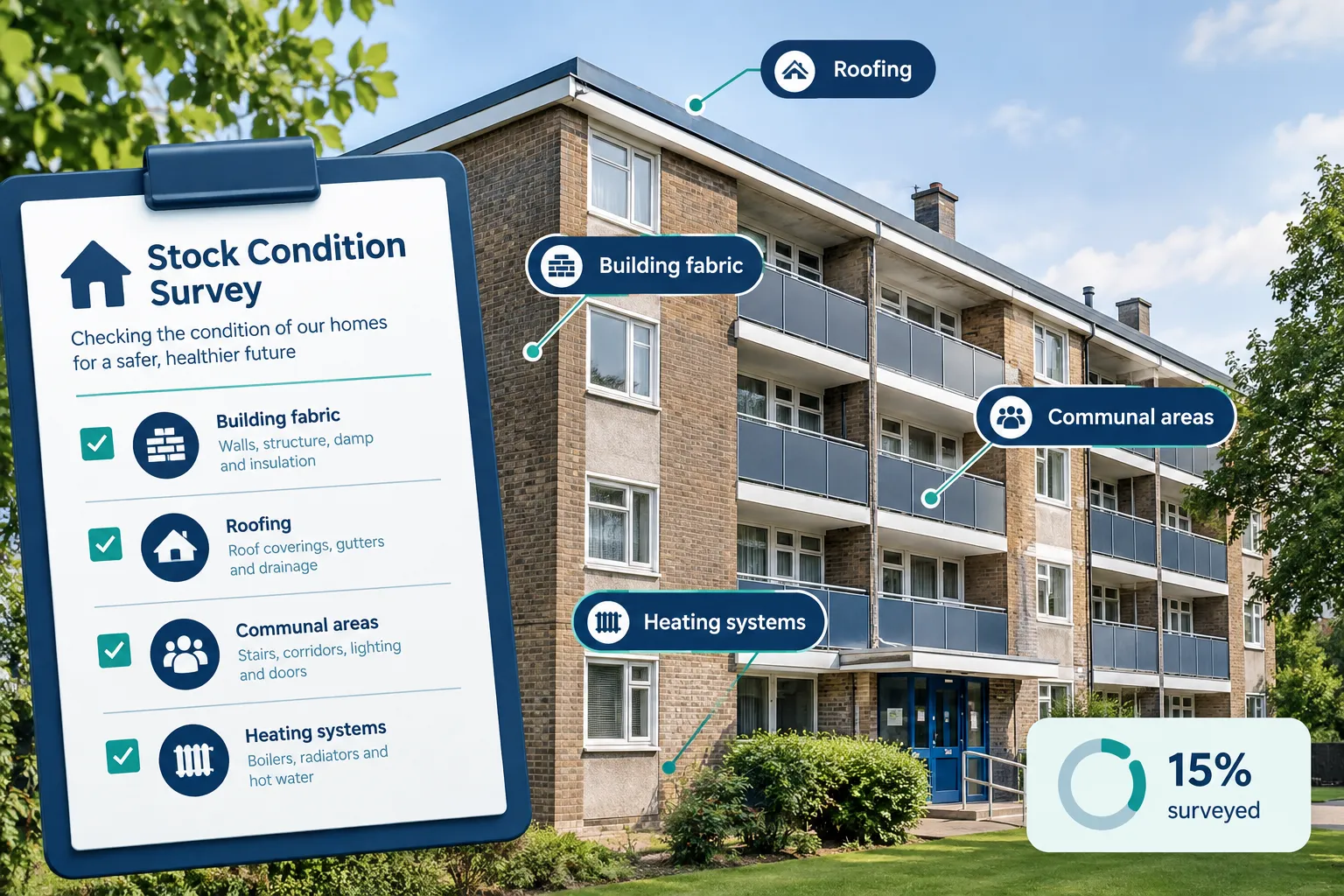
A stock condition survey is a systematic inspection of a building's fabric, services, and major components, roofs, windows, lifts, heating, electrics, used to estimate remaining life and plan maintenance budgets years in advance. Without it, a landlord is managing reactively, fixing what breaks rather than preventing failures.
With only 15% of Kingston's homes surveyed, the council itself admits it is largely working blind on the other 85%. That matters for three groups in particular.
Tenants rely on accurate data to know whether their homes meet the Decent Homes Standard and whether hazards are being tracked properly. Since Awaab's Law came into force for social housing on 27 October 2025, landlords face strict statutory timescales for investigating and fixing serious hazards such as damp and mould. Weak condition data makes it harder to comply consistently.
Leaseholders in council-owned blocks are directly exposed financially. Service charges and major-works bills are calculated based on the condition of the block and its components. If the council does not know a roof needs replacing in three years, leaseholders may face a sudden, large bill with little warning, or conversely, be charged for work based on inaccurate assumptions.
Buyers of ex-council flats inherit this uncertainty. A flat's share of future major works, cladding remediation, lift replacement, or structural repairs depends entirely on block condition, information the council's own regulator says is largely missing.
How This Fits the Wider Kingston and London Market
The timing matters. ONS data released 16 September 2026 put the average London house price at £569,000, down 3.3% year-on-year as of July 2026, while London private rents rose 3.5% in the year to August 2026, averaging £2,332. With the Autumn Budget landing on 28 October 2026, housing costs and public spending on repairs and regeneration remain politically live issues.
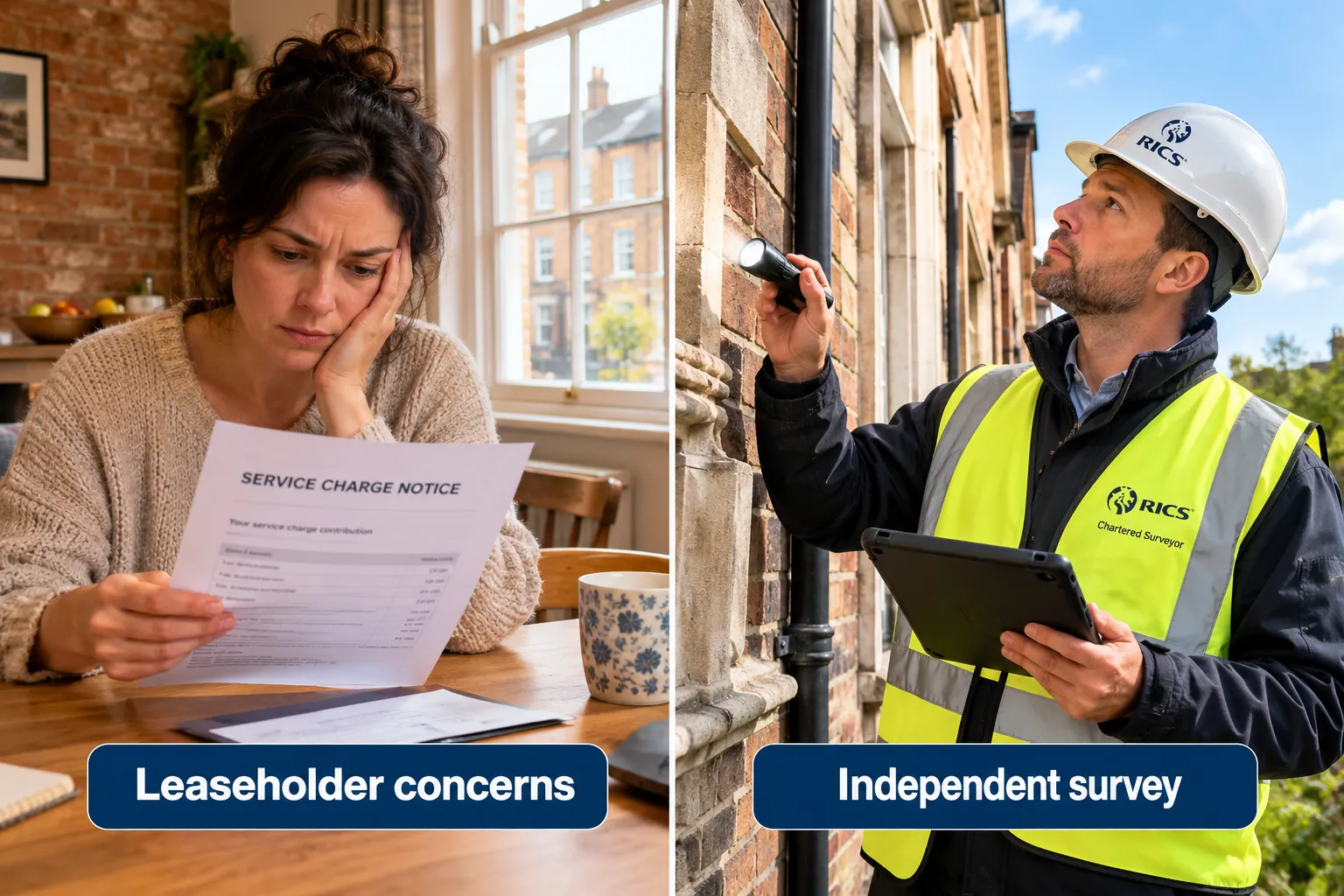
In a softening sales market but a tightening rental market, buyers have more room to negotiate and more reason to ask hard questions before committing. A council admitting it lacks condition data for most of its stock is exactly the kind of fact that should slow down a purchase decision, not accelerate it.
What Residents, Leaseholders, and Buyers Should Ask Next
The council has committed to completing a full stock condition survey within 18 months. Until that work is done, individuals need their own information.
If you are a council tenant, ask your housing officer:
- Has your specific block been surveyed yet under the new programme?
- What is the current timeline for repairs to communal areas?
- How are complaints now being tracked and resolved compared with before?
If you are a leaseholder, request:
- The most recent condition report for your block, if one exists
- Details of any planned major works and anticipated costs
- Confirmation of how service charge reserves are calculated without complete stock data
If you are buying an ex-council flat, do not assume the council's records are current. Commission an independent RICS Level 2 or Level 3 survey of the flat itself, and separately ask the managing agent or freeholder for:
- Any existing block-wide stock condition survey
- A schedule of planned or likely major works
- Reserve fund balances and recent service charge history
| Buyer Risk Area | Why It Matters | Protective Step |
|---|---|---|
| Unknown roof/structure condition | Can trigger large one-off major works bills | Independent RICS survey before exchange |
| Lift and communal services | Shared costs split among leaseholders | Request block survey or recent inspection |
| Fire safety and cladding | Legal and insurance implications | Ask for EWS1 or equivalent documentation |
| Service charge history | Predicts future cost trends | Review 3-5 years of accounts |
"Accurate, up-to-date information was unavailable for most properties.", Regulator of Social Housing, October 2026 inspection findings
That single sentence from the regulator is the clearest reason independent verification now matters more than council paperwork alone.
The Role of an Independent Survey in Protecting Buyers
A RICS chartered surveyor's report is not a substitute for a council-wide stock condition survey, but it fills the exact gap that matters to an individual buyer or leaseholder: the condition of the specific flat and, where accessible, the block they are tied to financially. A Level 2 Homebuyer Report suits straightforward ex-council flats in reasonable condition. A Level 3 Building Survey is worth the extra cost for older blocks, properties with visible defects, or anyone planning renovation work.
Given that Kingston's own regulator-confirmed data gap covers 85% of stock, relying on assumptions rather than direct inspection carries real financial risk, particularly for major works bills that can run into tens of thousands of pounds for roof or cladding work in shared blocks.
Frequently Asked Questions
What does a C3 rating from the Regulator of Social Housing mean?
It means the landlord meets most required consumer standards but has significant gaps, and improvement is needed. It is not the most severe grade, but it signals real concerns that the regulator will monitor.
Why have only 15% of Kingston's council homes been surveyed?
The council is running a new stock condition programme that began recently. Full coverage has not yet been achieved, and a complete survey is promised within 18 months.
Does the C3 rating mean Kingston council homes are unsafe?
No. The regulator confirmed Kingston meets key legal health-and-safety requirements. The concerns relate mainly to data accuracy, oversight, communal repairs, and complaints handling rather than immediate danger.
Should I avoid buying an ex-council flat in Kingston because of this rating?
Not necessarily, but proceed with more caution. Commission an independent RICS survey and request block-level condition and service charge information before exchanging contracts.
How does this affect leaseholder service charges?
Incomplete condition data can mean major works costs are identified later and billed suddenly, or budgeted inaccurately. Leaseholders should ask for the latest available block survey and reserve fund details.
What is Awaab's Law and does it apply here?
Awaab's Law, in force for social housing since 27 October 2025, sets strict timescales for landlords to investigate and fix serious hazards like damp and mould. It applies to Kingston as a social landlord regardless of the C3 rating.
Conclusion
Kingston Council's C3 rating is a clear signal, not a crisis alarm. The authority meets its core legal safety duties and has improved day-to-day repairs, but the Kingston council homes stock condition survey gap, only 15% of stock inspected, leaves residents, leaseholders, and buyers with a genuine information problem that will take up to 18 months to close.
In the meantime, do not wait for the council's full survey. Tenants should press for block-specific updates, leaseholders should request current condition and reserve fund data, and anyone buying an ex-council flat should treat an independent RICS survey as essential, not optional. In a market where London prices are softening but rental demand is rising, protecting against hidden major works costs is one of the most practical steps a buyer or leaseholder can take right now.
Kingston council homes stock condition survey, Regulator of Social Housing, C3 rating, ex-council flats, leasehold service charges, RICS survey, Decent Homes Standard, Awaab's Law, Kingston upon Thames housing, social housing regulation, council tenant rights, property buyers London