}
A property that looks sound to the naked eye can carry six figures of hidden liability. Research consistently shows that serious structural defects, unchecked damp, or unresolved cladding issues can reduce a property's open market value by anywhere from 10% to more than 50%, yet many buyers only discover this after an offer has been accepted. Understanding how building survey defects and remediation costs feed directly into formal valuation adjustments is essential knowledge for buyers, sellers, lenders, and their advisers in 2026.
This article provides a surveyor's breakdown of the most common defects uncovered during building surveys, how remediation costs are estimated, and the precise mechanisms by which RICS-registered valuers translate those costs into adjusted market values, renegotiated offers, and lender retention decisions.
Key Takeaways
- Serious building defects do not automatically reduce value pound-for-pound; valuers apply a structured methodology that weighs remediation cost, market stigma, and comparable evidence.
- RICS Red Book 2026 guidance requires valuers to reflect all material factors, including physical condition, in their opinion of market value.
- Cladding defects on multi-storey residential buildings carry some of the most extreme valuation impacts in 2026, with some affected flats valued at nominal sums pending remediation.
- Lenders routinely impose retentions equal to the estimated repair cost when defects are identified, directly affecting mortgage offers.
- A full Level 3 Building Survey is the most effective tool for uncovering serious defects before exchange of contracts.
What Building Survey Defects Actually Mean for Market Value
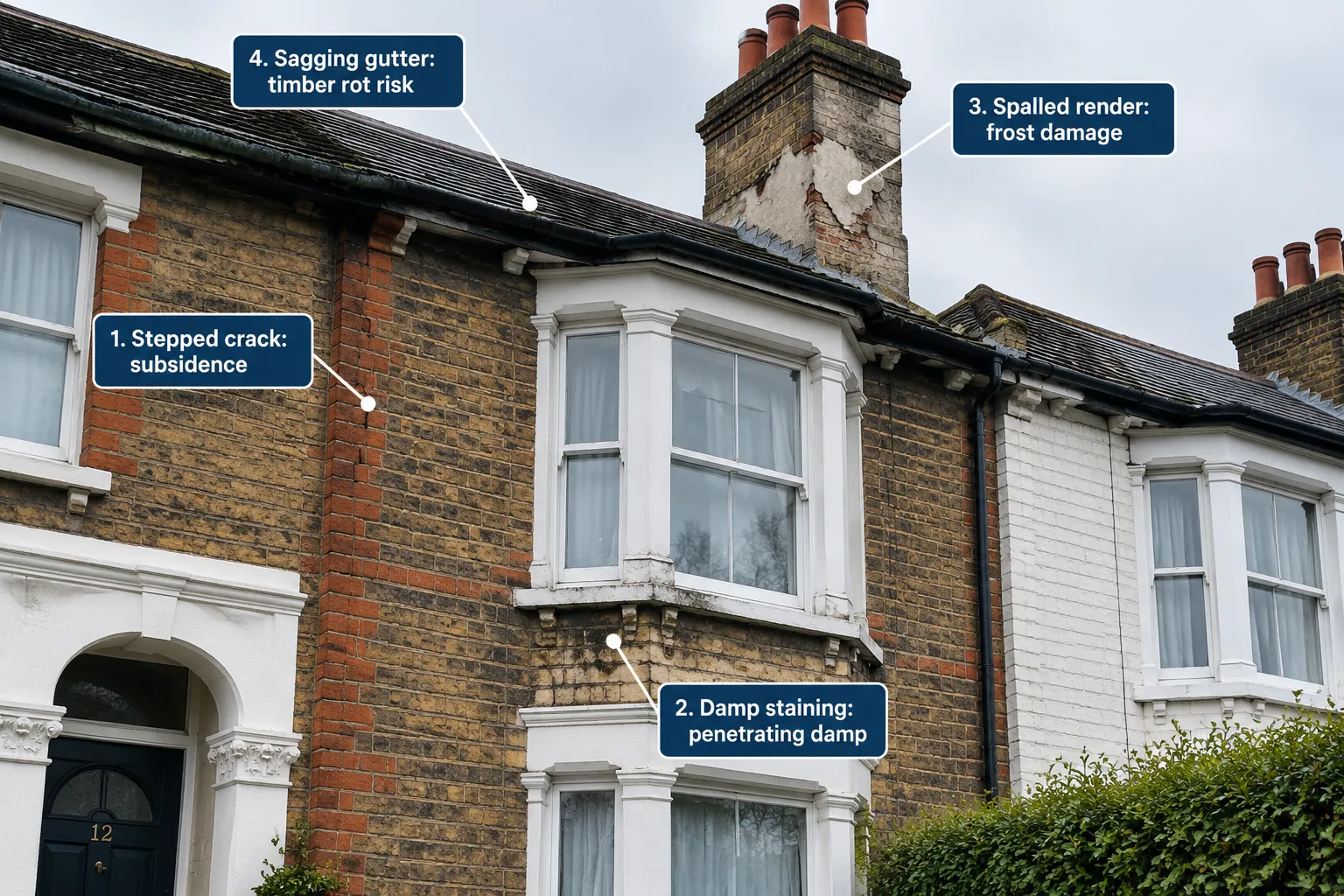
The phrase "building survey defects" covers a wide spectrum, from a cracked render panel costing a few hundred pounds to structural subsidence requiring underpinning at £30,000 or more. Not every defect triggers a valuation adjustment. Minor maintenance items are typically noted in a survey report without affecting the surveyor's opinion of value. It is the serious, material defects, those that affect structural integrity, habitability, or mortgageability, that feed directly into how valuers adjust market value for serious issues.
RICS Red Book Global Standards, which govern formal valuations in the UK and internationally, require that the valuer's opinion of market value reflects the property's actual physical condition as at the date of valuation [1]. This is not discretionary. A valuer who ignores a known structural defect when forming their opinion risks professional liability and breach of RICS standards [2].
The separation of roles matters here. A building surveyor identifies and describes defects; a valuer translates those findings into a monetary impact. In practice, both roles are often performed by the same chartered surveyor, but the 2026 RICS guidance has sharpened the distinction, requiring explicit reasoning when condition findings influence the valuation figure [6].
The Most Common Serious Defects Found in Building Surveys
The following defects most frequently result in material valuation adjustments:
| Defect Category | Typical Remediation Cost Range (2026) | Valuation Impact |
|---|---|---|
| Structural subsidence / underpinning | £15,000, £60,000+ | High; may also affect insurability |
| Roof replacement (pitched) | £8,000, £25,000 | Moderate to high |
| Damp and timber treatment | £3,000, £20,000 | Moderate; stigma effect adds further discount |
| Cladding / EWS1 failure | £10,000, £100,000+ per unit share | Extreme; can render property unmortgageable |
| Drainage failure / collapsed drains | £2,500, £15,000 | Moderate |
| Asbestos removal | £1,500, £30,000+ | Moderate to high depending on type |
| Electrical rewire | £5,000, £15,000 | Low to moderate |
For guidance on identifying specific structural concerns before commissioning a full survey, the checklist for house surveys in London provides a useful starting framework.
How Valuers Adjust Market Value for Serious Issues: The Core Methodology
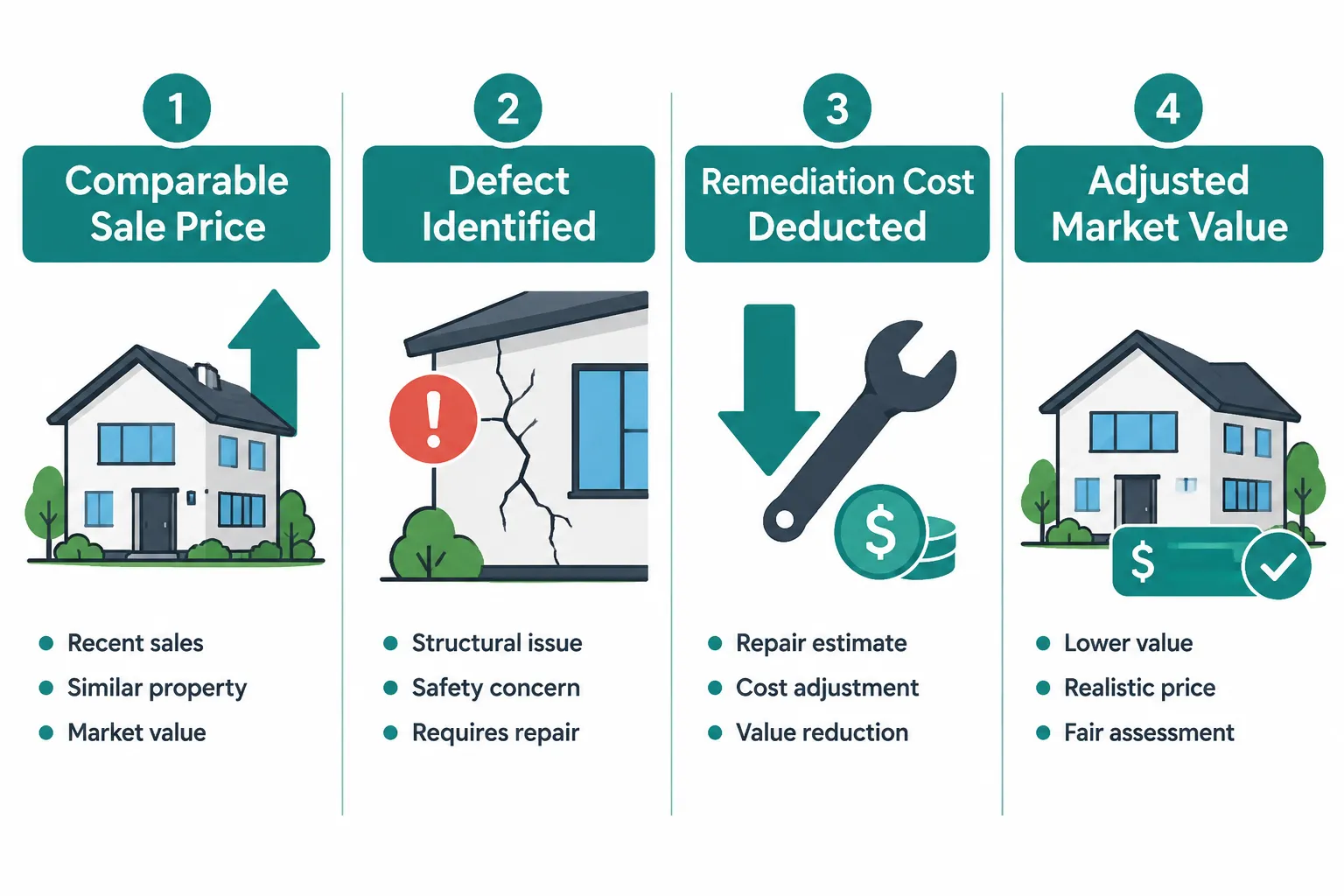
Understanding building survey defects and remediation costs requires understanding the valuation methodology that sits behind the adjusted figure. Valuers do not simply subtract the repair bill from the asking price. The process is more nuanced and involves several distinct analytical steps.
Step 1: Establish the Unaffected Comparable Value
The valuer first determines what the property would be worth if the defect did not exist. This is done by analysing comparable sales of similar properties in similar condition in the same market area. This "as if sound" figure is the baseline.
Step 2: Estimate the Remediation Cost
The valuer must form a view on the cost of remedying the defect to a satisfactory standard. This does not require a contractor's quote at the valuation stage, but the estimate must be realistic and evidence-based. In 2026, valuers increasingly reference specialist cost data and, for complex defects, commission or rely on specialist reports from structural engineers, damp specialists, or cladding consultants.
Key principle: The remediation cost estimate must reflect the full scope of works, not just the visible repair, but associated costs such as temporary accommodation, professional fees, and consequential works.
Step 3: Apply the Appropriate Adjustment Technique
There are three principal adjustment techniques used in practice:
1. Direct cost deduction
For straightforward, quantifiable defects with a clear repair cost, the valuer deducts the full estimated remediation cost from the comparable value. This is most appropriate where the defect is the only material issue and the market would price it on a cost-to-cure basis.
2. Percentage reduction
Where defects are harder to quantify precisely, or where market evidence suggests buyers apply a blanket discount, the valuer may apply a percentage reduction. Market data suggests buyers in 2026 typically discount properties with serious damp issues by 10-25% beyond the direct repair cost, reflecting the stigma associated with damp and mould [8].
3. Capitalised income adjustment (investment properties)
For income-producing properties, defects are reflected through both rent and yield adjustments. A building with a failing roof may attract lower rents (reduced income) and a higher yield (increased risk), compounding the value reduction. This technique is standard in commercial building surveys in London where investment value metrics dominate.
Step 4: Apply a Stigma Discount Where Warranted
Beyond the direct cost of repair, some defects carry a residual stigma that persists even after remediation. Contaminated land, properties with a history of subsidence, and buildings with past flooding are classic examples. Evidence from contaminated site transactions in the UK shows that post-remediation values can remain 5-15% below equivalent unaffected properties, reflecting buyer reluctance and perceived ongoing risk [5].
For subsidence specifically, the guide to checking for subsidence explains the physical indicators that surveyors look for, and that valuers must factor into their assessments.
Cladding, EWS1, and Extreme Valuation Impacts in 2026
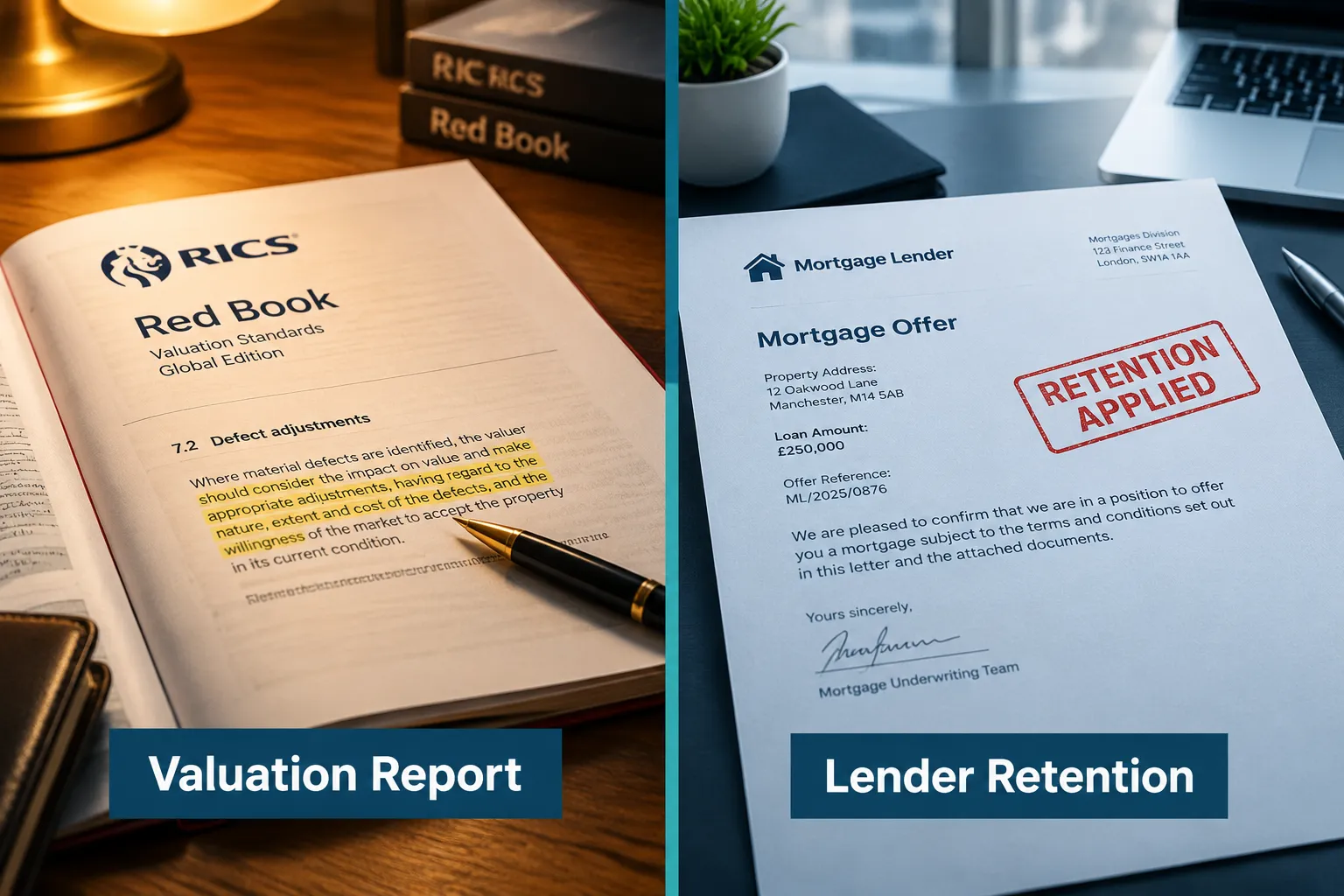
The cladding crisis remains one of the most significant valuation challenges in the UK residential market. RICS published an updated standard for multi-storey residential buildings with cladding, effective 1 November 2026, which tightens the requirements for how valuers handle EWS1 (External Wall System) assessments [3].
Under the updated standard:
- Valuers must not proceed with a mortgage valuation on an affected building without either a satisfactory EWS1 form or documented evidence that one is not required.
- Where remediation is unfunded and no EWS1 form is available, the valuation must reflect the full uncertainty, which in practice frequently results in a nominal or nil valuation for mortgage purposes.
- Buildings with confirmed cladding defects but an active remediation programme under the Building Safety Act may be valued on a "special assumption" basis, reflecting the expected post-remediation value discounted for time and risk [2].
The practical consequence is stark. A flat in an affected block that would otherwise be worth £400,000 may be valued at £1 for mortgage purposes until the EWS1 process is resolved. This is not a valuer's conservatism, it reflects the reality that no mainstream lender will advance funds against a property that cannot be insured or resold [7].
Buyers and owners of flats in multi-storey buildings should consult RICS Registered Valuers in London to understand how the updated 2026 standard applies to their specific building before making any transaction decisions.
Lender Retentions and How Defect Costs Flow Into Mortgage Offers
When a mortgage valuer identifies a serious defect, the lender's response is typically one of three outcomes:
- Retention, the lender advances the mortgage minus the estimated repair cost, releasing the retained sum only when remediation is certified complete.
- Conditional offer, the mortgage is offered subject to the defect being remediated before completion.
- Declined, where the defect is so serious that the property is considered unsuitable security (common with cladding, severe subsidence, or properties below minimum habitable standard).
RICS guidance on interim valuations and retentions confirms that where defects are identified, the retained amount should reflect the full estimated cost of rectification, not a partial or discounted figure [4]. The retention mechanism protects the lender's security interest but also creates practical challenges for buyers who must fund the repair gap between the retained mortgage and the purchase price.
The RICS Red Book Valuation in London framework governs how these formal valuations are conducted, ensuring that lender-instructed valuers follow consistent, auditable standards.
Practical Example: How a Retention Works
Consider a property under offer at £350,000. A Level 3 Building Survey identifies a failed flat roof over a rear extension, with estimated replacement costs of £12,000, and evidence of penetrating damp to two first-floor rooms requiring treatment at an estimated £6,500.
- Unaffected comparable value: £350,000
- Less: roof replacement cost: -£12,000
- Less: damp remediation cost: -£6,500
- Less: stigma/uncertainty allowance (5%): -£17,500
- Adjusted valuation: £314,000
The lender may then offer a mortgage based on £314,000 with a retention of £18,500 pending completion of roof and damp works. The buyer must either renegotiate the purchase price, fund the gap from reserves, or walk away.
Choosing the Right Survey to Uncover Material Defects
The valuation adjustment process only works when defects are actually identified. A mortgage valuation alone, the basic inspection most lenders commission, is not designed to identify all material defects. It is a limited inspection focused on the lender's security, not the buyer's interests.
For any property with age, complexity, or visible concerns, a Level 3 Building Survey (formerly the Full Structural Survey) is the appropriate tool. It provides a detailed assessment of all accessible elements, condition ratings, and repair recommendations. The HomeBuyers Report vs Building Survey guide sets out clearly when each level of survey is appropriate.
Where a specific concern has already been identified, a crack in a wall, signs of damp, or a suspected drainage issue, a Specific Defect Report provides a focused, cost-effective investigation of that single issue, with remediation recommendations and cost guidance that can be used directly in price negotiations.
For those concerned about wall cracks specifically, the surveyor's guide to cracks in walls explains how to distinguish cosmetic cracking from structural movement, a distinction that directly affects both survey findings and valuation outcomes.
Using Survey Findings to Renegotiate the Purchase Price
A building survey that uncovers serious defects is not a transaction-killer, it is a negotiating tool. Buyers who receive a survey report identifying material defects have several options:
- Request a price reduction equal to the estimated remediation cost (or the full valuation adjustment if a formal RICS valuation has been obtained).
- Request that the seller completes remediation before exchange, with a retention held by solicitors pending sign-off.
- Proceed at the agreed price with full awareness of the liability, appropriate only where the buyer has the funds and appetite to manage the works.
- Withdraw, where the defect scope is beyond the buyer's resources or risk tolerance.
The strength of the negotiating position depends on the quality of the cost evidence. A vague reference to "possible damp issues" carries less weight than a specialist damp surveyor's report with itemised costings. Buyers should invest in specialist reports for any defect with a remediation cost above £5,000 before entering price negotiations.
Conclusion
Building survey defects and remediation costs are not abstract concerns, they translate directly into adjusted market values, reduced mortgage offers, and renegotiated transactions. The methodology that RICS-registered valuers apply in 2026 is systematic: establish the unaffected value, estimate the full remediation cost, apply the appropriate adjustment technique, and add a stigma discount where market evidence supports it.
Actionable next steps for buyers and owners:
- Commission a Level 3 Building Survey on any property that is not newly built, recently refurbished, or of standard modern construction.
- For flats in multi-storey buildings, establish EWS1 status before exchange, the 2026 RICS cladding standard makes this non-negotiable for mortgage purposes.
- Where a survey identifies serious defects, obtain specialist remediation cost reports before renegotiating, evidence-based figures carry far more weight with sellers and lenders.
- Engage an RICS Registered Valuer for a formal Red Book valuation if the defect scope is significant or if a lender retention is anticipated.
- Do not rely on a mortgage valuation alone to identify material defects, its purpose is to protect the lender, not the buyer.
Understanding how valuers adjust market value for serious issues empowers buyers to make informed decisions, negotiate effectively, and avoid the costly mistake of acquiring a property whose true liability was never properly assessed.
References
[1] Red Book Global Standards Incorporating IVS – rics.org
[2] Red Book Global – rics.org
[3] RICS Publishes Updated Standard For Multi Storey Residential Buildings With Cladding – rics.org
[4] Interim Valuations And Payment 1st Edition – rics.org
[5] What Brings Down Property Value – ibuyer.com
[6] Valuation December 2025 – rics.org
[7] Valuation Challenges In Londons 2026 Flat Market Stabilisation Chartered Surveyor Techniques Post Budget – princesurveyors.co.uk
[8] Molds Hidden Impact On Home Resale Values – moldonly.com