
Over 4.5 million leasehold properties exist across England and Wales, and service charge disputes represent one of the most contentious areas of property law. As 2026 brings sweeping regulatory reforms to the leasehold sector, the role of valuation expert witnesses has never been more critical in defending fair and reasonable service charge assessments before tribunals.
Understanding how Valuation Expert Witnesses in Service Charge Disputes: Defending Assessments for Leasehold Blocks in 2026 Reforms operate requires knowledge of both traditional RICS valuation methodologies and the evolving legal landscape. Expert witnesses must now navigate new transparency requirements, enhanced leaseholder protections, and stricter tribunal scrutiny while maintaining professional standards that withstand cross-examination.
Key Takeaways
- 📊 Expert valuation reports must incorporate RICS benchmarks and comparable evidence to demonstrate service charge reasonableness under 2026 reforms
- ⚖️ Tribunal challenges increasingly require robust expert testimony that addresses transparency, proportionality, and compliance with updated regulatory standards
- 🔍 Preparation methodology for expert witnesses now demands comprehensive documentation of comparable properties, market analysis, and detailed cost justification
- 📋 2026 regulatory changes impose stricter requirements on service charge assessments, making professional expert witness support essential for defending management decisions
- 💼 Professional qualifications and adherence to RICS standards remain fundamental to expert witness credibility in leasehold dispute resolution
Understanding Service Charge Disputes in Leasehold Properties
Service charge disputes arise when leaseholders challenge the reasonableness or recoverability of charges levied by freeholders or management companies. These disputes typically involve disagreements over maintenance costs, major works expenditure, reserve fund contributions, or management fees.
Common Types of Service Charge Challenges
Leaseholders frequently contest service charges on several grounds:
- Excessive costs: Claims that charges exceed reasonable market rates for comparable services
- Unnecessary works: Arguments that repairs or improvements were not required or proportionate
- Poor quality: Allegations that work quality does not justify the costs charged
- Lack of consultation: Failure to follow statutory consultation procedures for major works
- Administrative errors: Incorrect apportionment of costs among leaseholders
The First-tier Tribunal (Property Chamber) handles most service charge disputes in England and Wales. Tribunal decisions hinge on whether charges are reasonable in amount and whether services or works were carried out to a reasonable standard.
The Expert Witness Role
Valuation expert witnesses provide independent professional opinions to assist tribunals in determining reasonableness. Their responsibilities include:
✅ Analyzing service charge accounts and supporting documentation
✅ Conducting market research on comparable properties and service costs
✅ Applying RICS valuation standards and professional guidance
✅ Preparing comprehensive expert reports with evidenced conclusions
✅ Providing oral testimony and responding to cross-examination
Expert witnesses must maintain impartiality and serve the tribunal rather than the party instructing them. This duty overrides any obligation to the instructing party—a principle reinforced in recent litigation strategy evolution[6].
Professional expert witness report services require extensive experience in both property valuation and tribunal procedures to effectively defend service charge assessments.
Preparing Valuation Expert Reports for Service Charge Tribunals

The quality of expert report preparation directly impacts tribunal outcomes. Valuation experts must construct reports that withstand rigorous scrutiny while clearly communicating technical findings to non-specialist tribunal members.
RICS Standards and Professional Requirements
The Royal Institution of Chartered Surveyors (RICS) provides authoritative guidance for expert witnesses through:
- RICS Practice Statement and Guidance Note: Surveyors Acting as Expert Witnesses (4th edition)
- RICS Valuation – Global Standards (Red Book)
- RICS Service Charge Residential Management Code (3rd edition)
Compliance with these standards establishes professional credibility. Experts must demonstrate they have followed recognized methodologies and maintained objectivity throughout their analysis.
When preparing reports for service charge disputes, experts should obtain Red Book valuation compliant assessments where property valuations form part of the dispute evidence.
Essential Components of Expert Reports
A comprehensive expert witness report addressing service charge disputes should include:
1. Executive Summary
Concise overview of key findings and conclusions (typically 1-2 pages)
2. Instructions and Scope
- Details of instructing party
- Questions to be addressed
- Documents reviewed
- Site inspections conducted
- Limitations or assumptions
3. Background and Context
- Property description and lease terms
- Service charge history and disputed items
- Relevant statutory provisions
- Timeline of events
4. Methodology and Analysis
- Valuation approach adopted
- Comparable evidence selection criteria
- Market research conducted
- Cost analysis framework
5. Comparable Evidence
The cornerstone of defending service charge assessments lies in robust comparable evidence. Experts must identify properties with similar characteristics:
| Comparison Factor | Considerations |
|---|---|
| Location | Same area, similar demographics, comparable amenities |
| Property Type | Building age, construction, size, facilities |
| Service Scope | Comparable maintenance, staffing, amenities |
| Management Structure | Similar organizational arrangements |
| Time Period | Contemporary or adjusted for inflation |
Experts should present at least three to five genuine comparables for each disputed service element, with detailed explanations of adjustments made for differences.
Benchmarking Against Industry Standards
Beyond individual comparables, experts should reference industry benchmarks:
- ARMA-Q (Association of Residential Managing Agents) service charge data
- RICS Service Charge Code guidance on reasonable costs
- Local authority published service charge information
- Trade association cost guidelines for specific services
These benchmarks provide context for tribunal assessment of reasonableness, particularly where direct comparables are limited.
For properties with complex leasehold arrangements, experts may need to conduct lease extension valuations to understand the broader property rights context affecting service charge obligations.
Addressing Proportionality and Necessity
The 2026 reforms place increased emphasis on proportionality—whether expenditure is appropriate given the property's characteristics and leaseholders' reasonable expectations.
Expert reports must address:
🔹 Necessity: Was the work or service genuinely required?
🔹 Timing: Was the expenditure appropriately scheduled?
🔹 Specification: Did the scope match actual needs?
🔹 Procurement: Were competitive quotes obtained?
🔹 Alternatives: Were less expensive options properly considered?
Documentation of the decision-making process strengthens defenses against challenges based on alleged over-specification or unnecessary expenditure.
Expert Testimony and Tribunal Proceedings Under 2026 Reforms
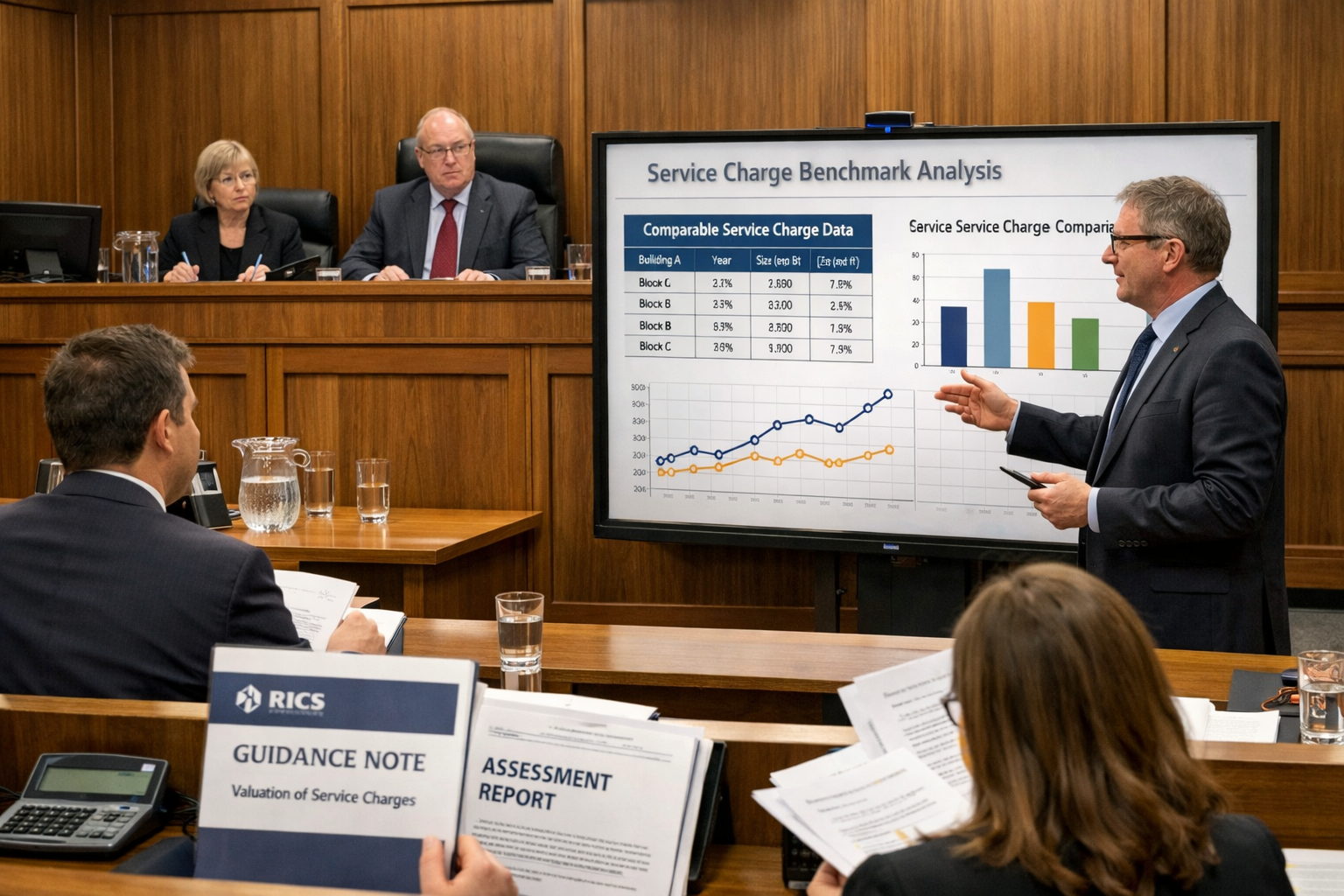
The 2026 leasehold reforms introduce significant changes affecting how Valuation Expert Witnesses in Service Charge Disputes: Defending Assessments for Leasehold Blocks in 2026 Reforms present their evidence and defend assessments.
Key 2026 Regulatory Changes
While specific legislative details continue to evolve, the 2026 reforms focus on:
Enhanced Transparency Requirements
- Mandatory standardized service charge statements
- Detailed cost breakdowns with supporting invoices
- Annual reporting deadlines with penalties for non-compliance
- Digital access to service charge information
Strengthened Leaseholder Protections
- Lower thresholds for consultation on major works
- Extended challenge periods for disputed charges
- Increased tribunal powers to award costs against landlords
- Stricter penalties for non-compliant managing agents
Standardized Assessment Frameworks
- Prescribed methodologies for reserve fund calculations
- Mandatory consideration of alternative procurement options
- Enhanced requirements for professional qualifications of managing agents
These changes create a more demanding environment for defending service charge assessments, making expert witness support increasingly valuable.
Preparing for Cross-Examination
Expert witnesses must anticipate robust challenges to their evidence. Effective preparation involves:
Anticipating Objections
- Review opposing party's case statement thoroughly
- Identify potential weaknesses in comparable evidence
- Prepare alternative analyses supporting conclusions
- Document rationale for methodological choices
Maintaining Professional Composure
- Respond to questions directly and concisely
- Acknowledge limitations in evidence where appropriate
- Avoid advocacy—maintain impartial expert role
- Reference specific documents and data points
Technical Communication
- Explain complex valuation concepts in accessible language
- Use visual aids (charts, photographs, diagrams)
- Provide clear reasoning for conclusions
- Distinguish between facts and professional opinion
The evolution of expert witness strategy in complex litigation emphasizes the importance of clear communication and robust methodology[6].
Documentation Standards
Under 2026 reforms, documentation requirements have intensified. Expert witnesses must ensure their reports reference:
✔️ Original source documents (invoices, contracts, quotes)
✔️ Photographic evidence of property condition and works
✔️ Correspondence demonstrating consultation compliance
✔️ Market data with verifiable sources and dates
✔️ Professional qualifications of contractors and service providers
Incomplete documentation significantly weakens expert evidence and may result in adverse tribunal findings.
For disputes involving building defects or construction quality, experts may need to coordinate with specialists providing commercial building surveys or structural assessments.
Case Study: Defending Major Works Assessment
Consider a typical scenario where leaseholders challenge a £2.5 million external redecoration and repair program for a 1980s purpose-built block of 60 flats.
Leaseholders' Arguments:
- Works were unnecessary and premature
- Specification was excessive (premium materials)
- Contractor selection lacked competitive tendering
- Individual contributions (£41,667) are unreasonable
Expert Witness Defense Strategy:
-
Necessity Evidence
- Building condition survey demonstrating deterioration
- Comparison with industry lifecycle standards (external decoration typically 7-10 years)
- Photographic evidence of failing paintwork and concrete spalling
- Professional opinion on consequences of deferring works
-
Specification Justification
- Analysis of material specifications against building requirements
- Comparison with specifications for similar period buildings
- Cost-benefit analysis of standard vs. premium materials (longevity, maintenance cycles)
- Expert opinion on appropriateness for building type and location
-
Procurement Validation
- Evidence of tender process (minimum three quotes)
- Comparable contractor pricing for similar projects
- Analysis of successful tenderer's qualifications and experience
- Market conditions affecting construction costs
-
Cost Reasonableness
- Breakdown of costs per square meter vs. industry benchmarks
- Comparison with similar projects in same geographical area
- Analysis of cost components (materials, labor, scaffolding, project management)
- Expert opinion on overall value for money
This comprehensive approach addresses each challenge ground with objective evidence, increasing the likelihood of tribunal acceptance.
The Impact of Professional Qualifications
Tribunal weight given to expert evidence correlates strongly with the expert's qualifications and experience. Essential credentials include:
- RICS Chartered Surveyor status (MRICS or FRICS)
- Specialist knowledge in residential property management
- Tribunal experience (demonstrated through previous cases)
- Continuing professional development (CPD) compliance
- Professional indemnity insurance
Experts without appropriate qualifications face significant credibility challenges, particularly where opposing experts hold superior credentials.
The business valuation expert witness market continues to emphasize the importance of specialized expertise and professional standing[7].
Navigating Common Challenges in Service Charge Defense
Reserve Fund Disputes
Reserve funds for future major works frequently generate disputes. Leaseholders may argue contributions are excessive or that accumulated funds are being mismanaged.
Expert witnesses defending reserve fund assessments must:
- Apply recognized reserve fund calculation methodologies
- Reference building lifecycle studies and replacement cost data
- Demonstrate alignment with lease terms and statutory requirements
- Compare reserve fund levels with similar properties
- Explain investment strategies and fund management
For properties requiring freehold valuation assessments, reserve fund adequacy may impact overall property value calculations.
Management Fee Challenges
Leaseholders often contest management fees as disproportionate. Defense requires:
Scope of Services Analysis
- Detailed breakdown of management activities
- Time allocation for various management functions
- Comparison with ARMA or similar industry benchmarks
- Evidence of value added by professional management
Market Comparison
- Management fees for comparable properties
- Regional variations in management costs
- Adjustments for property complexity and service levels
Emergency Works and Urgent Repairs
Disputes over emergency works present unique challenges due to compressed timelines and limited consultation opportunities.
Expert evidence should address:
- Urgency justification: Why immediate action was necessary
- Risk assessment: Potential consequences of delay
- Cost reasonableness: Whether emergency pricing was appropriate
- Procedural compliance: Adherence to lease terms and statutory provisions
Similar principles apply to disputes involving party wall matters where urgent structural work affects service charge obligations.
Quality and Workmanship Disputes
When leaseholders challenge work quality, expert witnesses may need to:
- Conduct detailed inspections of completed works
- Compare specifications with actual installation
- Assess compliance with building regulations and industry standards
- Obtain specialist technical reports (structural, mechanical, electrical)
- Provide remediation cost estimates where defects are identified
Coordination with commercial dilapidation survey specialists may be necessary for complex building defect assessments.
Strategic Considerations for 2026 and Beyond
Proactive Documentation Practices
The best defense against service charge challenges begins with robust documentation before disputes arise:
📌 Maintain comprehensive records of all decision-making processes
📌 Document consultation procedures meticulously
📌 Obtain multiple quotes for significant expenditure
📌 Conduct regular condition surveys to justify maintenance timing
📌 Keep photographic records of property condition over time
📌 Retain all correspondence with contractors and leaseholders
This proactive approach significantly strengthens expert witness evidence when disputes occur.
Digital Transformation and Technology
The 2026 reforms encourage digital service charge management platforms that provide:
- Real-time access to service charge accounts
- Digital document repositories
- Automated compliance tracking
- Transparent approval workflows
- Integrated communication systems
Expert witnesses should familiarize themselves with these platforms, as digital records increasingly form the primary evidence base for tribunal proceedings.
Mediation and Alternative Dispute Resolution
Before reaching tribunal, alternative dispute resolution (ADR) offers cost-effective resolution opportunities. Expert witnesses can support ADR through:
- Joint expert appointments (agreed by both parties)
- Without prejudice discussions with opposing experts
- Mediation support providing technical clarification
- Settlement negotiations based on realistic assessment of tribunal outcomes
Early expert involvement in ADR can prevent costly tribunal proceedings while achieving fair outcomes.
Continuing Professional Development
The evolving regulatory landscape requires experts to maintain current knowledge through:
- RICS training courses on leasehold reform
- Tribunal decision analysis and case law updates
- Industry seminars on service charge management
- Technical updates on building maintenance standards
- Professional networking with specialist practitioners
Demonstrating current knowledge enhances expert credibility and ensures advice reflects the latest regulatory requirements.
Conclusion
Valuation Expert Witnesses in Service Charge Disputes: Defending Assessments for Leasehold Blocks in 2026 Reforms play an indispensable role in resolving complex property disputes fairly and efficiently. As regulatory reforms intensify scrutiny of service charge practices, the demand for qualified, experienced expert witnesses will continue to grow.
Successful defense of service charge assessments requires meticulous preparation, comprehensive comparable evidence, adherence to RICS professional standards, and clear communication of technical findings. Expert witnesses must balance their duty to the tribunal with thorough analysis that supports reasonable and proportionate service charge decisions.
Actionable Next Steps
For property managers, freeholders, and managing agents facing service charge challenges:
- Engage expert witnesses early in the dispute process to assess evidence strength and identify documentation gaps
- Ensure comprehensive documentation of all decision-making processes, consultations, and procurement procedures
- Invest in professional qualifications for managing agents and ensure compliance with 2026 regulatory requirements
- Consider proactive condition surveys and lifecycle planning to justify future service charge requirements
- Explore ADR opportunities before committing to tribunal proceedings, with expert support to facilitate resolution
For leaseholders seeking to understand service charge assessments:
- Request detailed breakdowns of all service charge components with supporting documentation
- Research comparable properties to understand whether charges align with market norms
- Seek independent expert advice before challenging charges at tribunal
- Understand your rights under the 2026 reforms and statutory consultation requirements
- Maintain constructive dialogue with managing agents to resolve concerns informally where possible
The 2026 reforms represent a significant shift toward greater transparency, accountability, and leaseholder protection in service charge management. Expert witnesses who adapt to these changes while maintaining rigorous professional standards will continue to provide essential support in defending fair and reasonable service charge assessments.
For professional assistance with service charge disputes, expert witness services provide the specialized knowledge and tribunal experience necessary to navigate this complex area of property law effectively.
References
[1] Florida Sixth District Court Of Appeal Eliminates Expert Requirements For Determining Attorneys Fee Awards – https://qpwblaw.com/florida-sixth-district-court-of-appeal-eliminates-expert-requirements-for-determining-attorneys-fee-awards/
[2] insurancejournal – https://www.insurancejournal.com/news/southeast/2026/03/26/863455.htm
[3] Valuation And Litigation Briefing March April 2026 – https://wm-cpa.com/accounting-insight/valuation-and-litigation-briefing-march-april-2026/
[4] Business Valuations Expert Witness – https://capitalexpertservices.com/articles/business-valuations-expert-witness/
[5] Predictions 2026 Disputes And Investigations – https://www.simmons-simmons.com/en/publications/cmj28qvjt00eouj4gwocfl0mg/predictions-2026-disputes-and-investigations
[6] How Expert Witness Strategy Is Evolving In Complex Litigation – https://www.doar.com/insights/how-expert-witness-strategy-is-evolving-in-complex-litigation/
[7] Expert Witness Valuation Market May See Big Move Major Giants – https://www.openpr.com/news/4339465/expert-witness-valuation-market-may-see-big-move-major-giants