
}
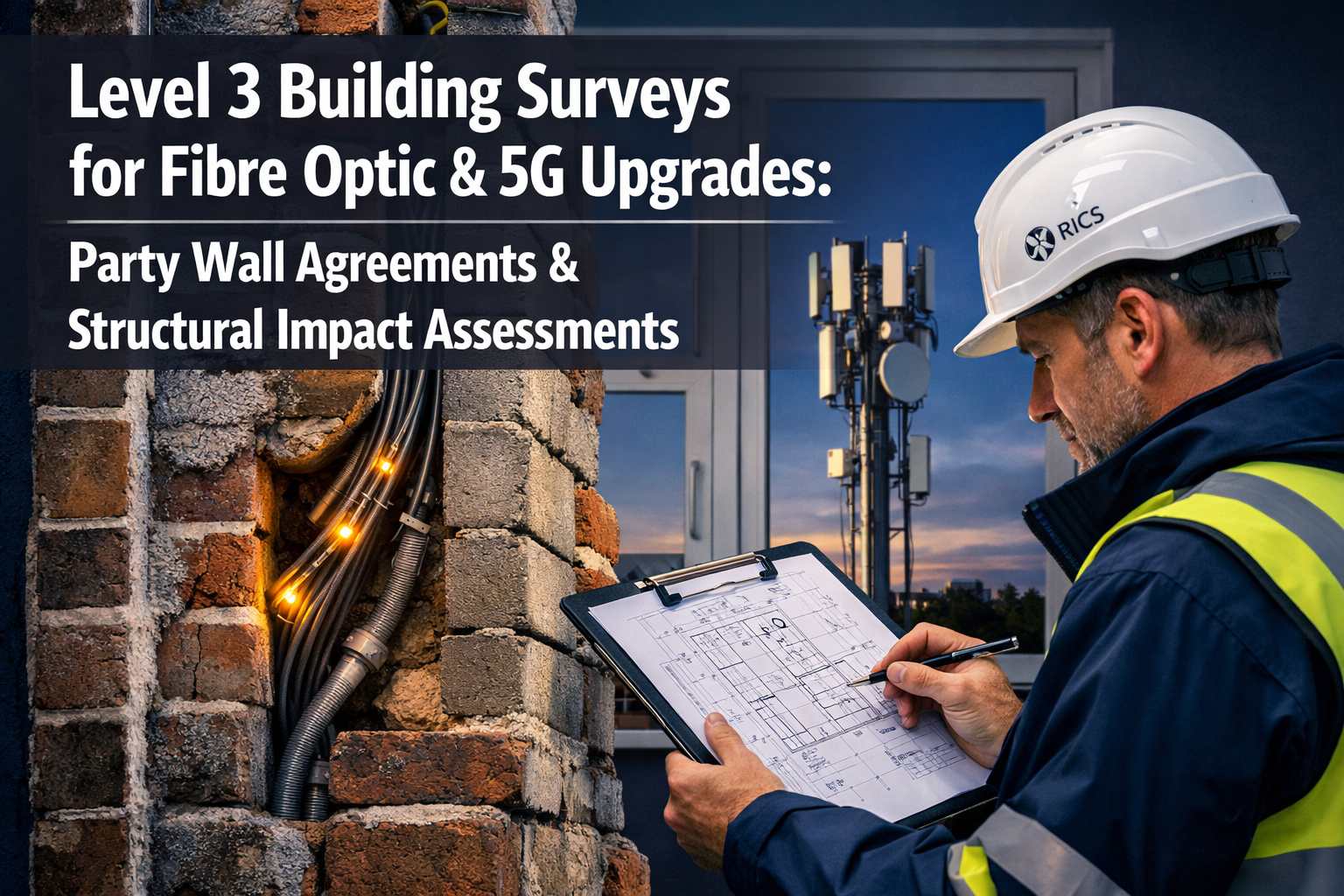
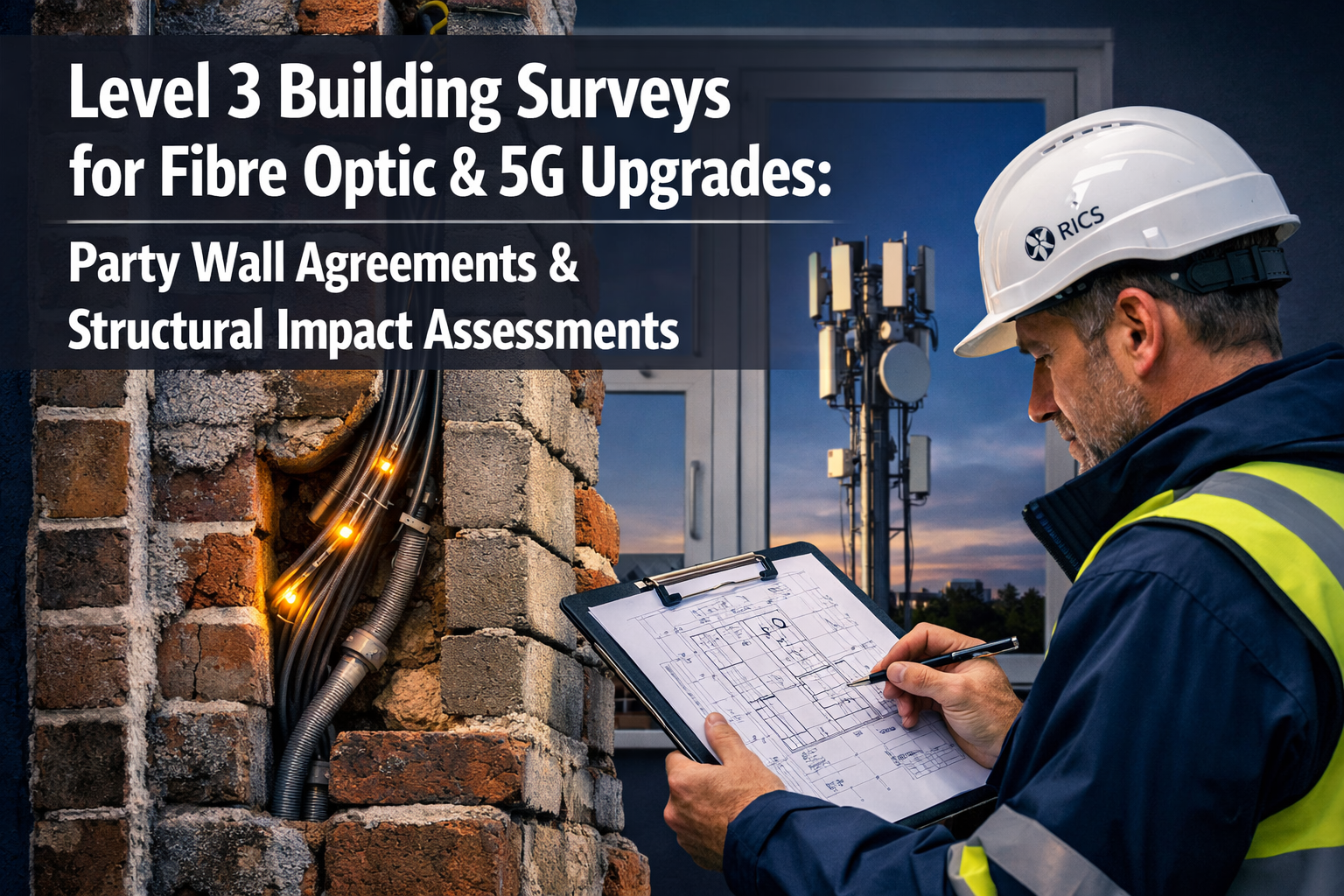
A 340% surge in party wall disputes linked to telecommunications infrastructure has hit UK property owners since 2024 — and the 5G rollout shows no signs of slowing down [1]. As network operators drill through shared walls, mount masts on rooftops, and thread fibre optic cables through fire-resisting partitions, the question of who assesses the structural risk — and who bears legal responsibility — has never been more pressing.
Level 3 Building Surveys for Fibre Optic and 5G Upgrades: Party Wall Agreements and Structural Impact Assessments sit at the intersection of property law, structural engineering, and rapidly evolving telecoms regulation. For homeowners, landlords, and building managers, understanding this intersection is no longer optional — it is essential protection.
Key Takeaways 📋
- Level 3 Building Surveys (formerly Full Structural Surveys) provide the most detailed assessment available and are the appropriate tool when telecoms upgrades affect shared or load-bearing walls.
- Party Wall Act 1996 notices are legally required before drilling through or attaching equipment to party walls — failure to serve notice can result in injunctions and costly disputes.
- A Schedule of Condition should be completed before any telecoms work begins, creating a documented baseline to resolve damage claims.
- The UK government's January 2026 consultation proposed relaxing some Building Safety Regulator (BSR) gateway requirements for internal fibre optic drilling — but external wall work remains under the full higher-risk building (HRB) regime [2].
- Specialist surveys are often recommended alongside Level 3 assessments when telecoms infrastructure impacts are complex or involve fire-resisting structures [4].
What Is a Level 3 Building Survey and Why Does It Matter for Telecoms Upgrades?
A Level 3 Building Survey — also known as a Full Building Survey or Full Structural Survey — is the most comprehensive residential property inspection available under the RICS Home Survey Standard. It goes significantly further than a Level 2 HomeBuyer Report, examining the construction, condition, and structural integrity of every accessible element of a building [4].
💡 Pull Quote: "A Level 3 survey is not just a property health check — in the context of telecoms upgrades, it becomes a legal and structural safeguard for every party involved."
What a Level 3 Survey Covers
According to RICS protocols, a Level 3 survey typically includes [4]:
| Survey Element | Relevance to Telecoms Upgrades |
|---|---|
| Structural movement assessment (subsidence, heave, settlement) | Identifies pre-existing movement before drilling or mast installation |
| Roof structure and coverings | Critical for rooftop 5G mast assessments |
| Walls, floors, and ceilings | Identifies load-bearing and fire-resisting elements |
| Damp, timber, and decay evaluation | Reveals vulnerabilities that cable penetrations could worsen |
| Visible condition of plumbing, electrics, and heating | Flags services that may be disrupted by cable routing |
| Drainage system inspection | Relevant where ground-level telecoms equipment is installed |
What a Level 3 Survey Does NOT Include
It is equally important to understand the limits [4]:
- ❌ Invasive checks (lifting floorboards, drilling test holes)
- ❌ Testing of electrical, gas, or water services
- ❌ Cost estimates for repairs (unless specifically commissioned)
- ❌ Specialist investigations such as asbestos surveys or full structural engineering analysis
This last point matters enormously for telecoms projects. When a Level 3 surveyor identifies suspected defects — such as cracking near a proposed cable route or weakened masonry at a mast fixing point — the report will recommend specialist surveys. For complex telecommunications infrastructure impacts, those specialist referrals are not optional extras; they are the next mandatory step [4].
For a detailed comparison of survey levels, the Homebuyer Report vs Building Survey guide provides a clear breakdown of what each inspection covers and when to commission each type.
Party Wall Agreements: Legal Requirements When Telecoms Work Crosses Boundaries
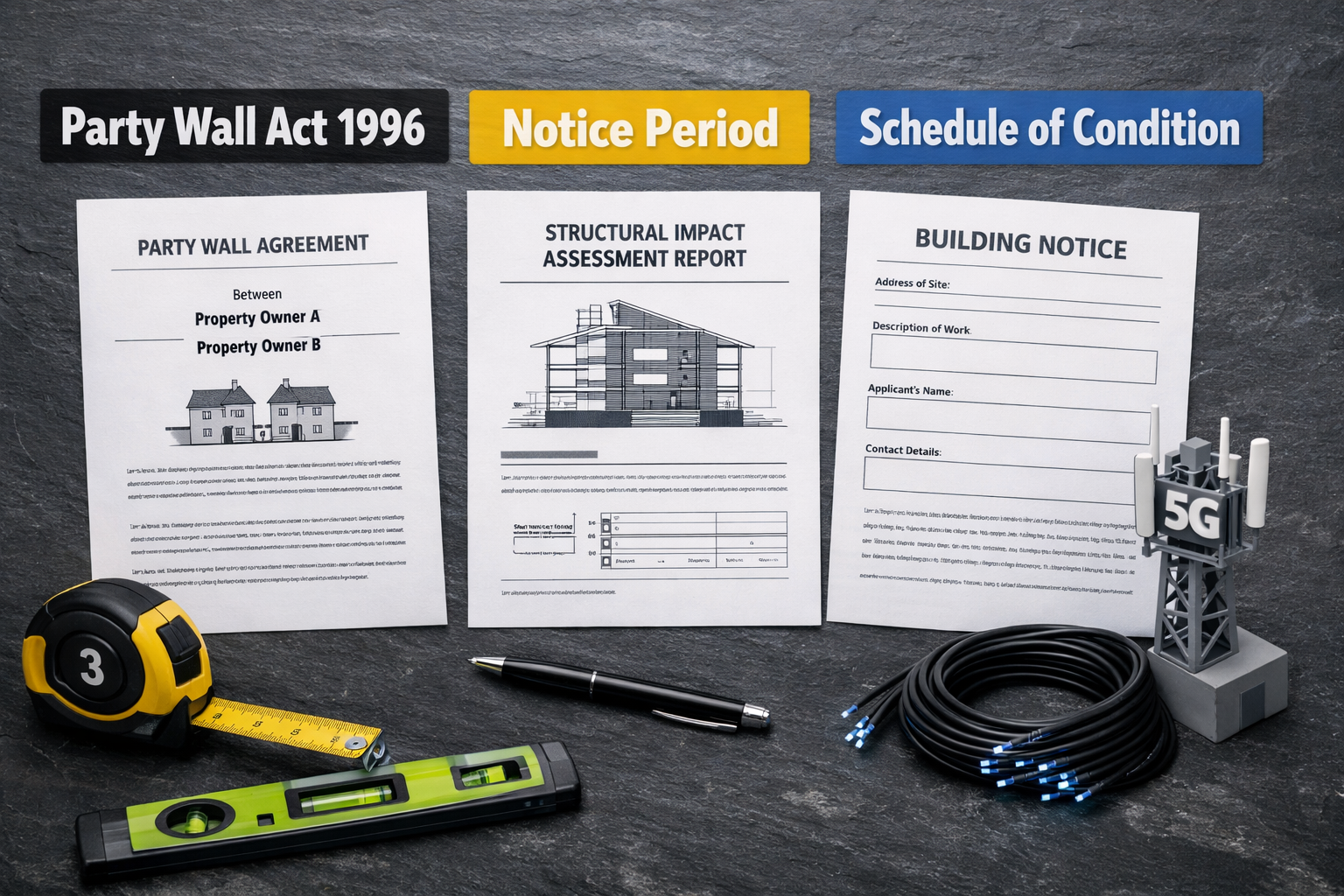
The Party Wall etc. Act 1996 governs any work that affects a shared wall, boundary structure, or the foundations within three to six metres of a neighbouring property. Telecoms upgrades — particularly fibre optic cable installations and 5G small cell or mast installations — frequently trigger these requirements in ways that property owners and even some network operators fail to anticipate.
When Is a Party Wall Notice Required? 🏗️
A formal notice must be served on all adjoining owners before work begins if the telecoms upgrade involves:
- Drilling through a party wall to route fibre optic cables
- Attaching brackets, conduits, or equipment to a shared wall structure
- Installing mast foundations or fixings within the notifiable zone of a boundary
- Cutting into or exposing any part of a party wall for cable management
The notice period is typically two months for party structure works and one month for line of junction works. Failure to serve notice does not make the work illegal, but it removes the legal protections the Act provides — and exposes the building owner to injunctions and neighbour disputes. For a comprehensive overview of the notice process, the Party Wall Matters guide covers every stage from initial notice to award.
The Role of the Schedule of Condition 📄
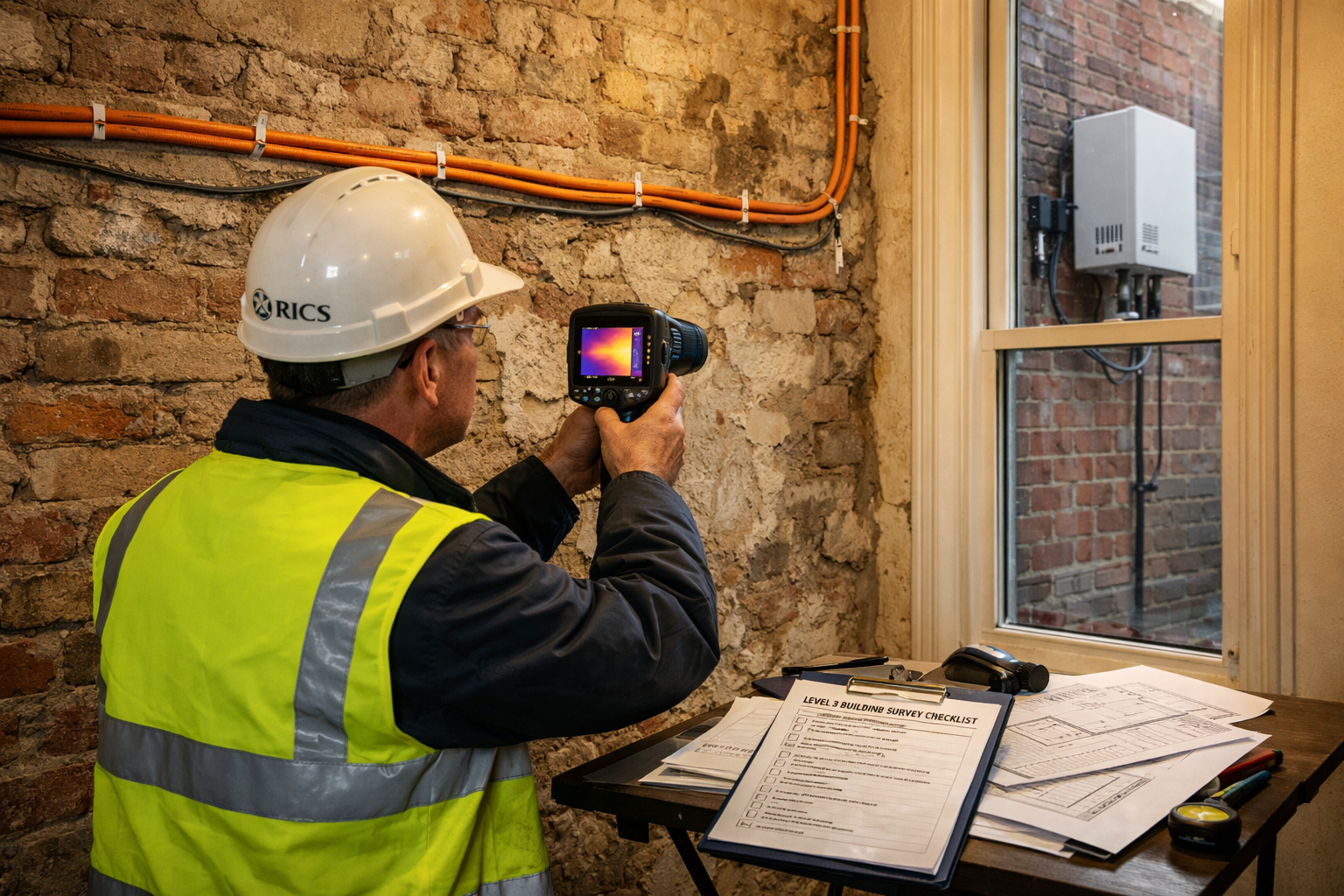
Before any telecoms contractor picks up a drill, a Schedule of Condition should be completed. This is a detailed photographic and written record of the existing state of the party wall and adjoining property. It serves as the definitive baseline if a neighbour later claims that cable installation caused cracking, damp ingress, or structural damage.
The Party Wall Schedule of Condition process is a standard part of the party wall surveyor's toolkit — and in the context of telecoms upgrades, it is arguably the single most important document a building owner can commission before work starts.
Appointing a Party Wall Surveyor
Under the Act, both the building owner (the party carrying out the work) and the adjoining owner have the right to appoint their own surveyor. The two surveyors then agree a Party Wall Award — a legally binding document that sets out:
- The scope and method of the telecoms work
- Working hours and access arrangements
- Obligations to make good any damage
- Rights of inspection during and after the works
If disputes arise during or after the process, the Party Wall Disputes resolution process provides a structured legal framework for resolution without immediately resorting to litigation.
Level 3 Building Surveys for Fibre Optic and 5G Upgrades: Structural Impact Assessments in Practice
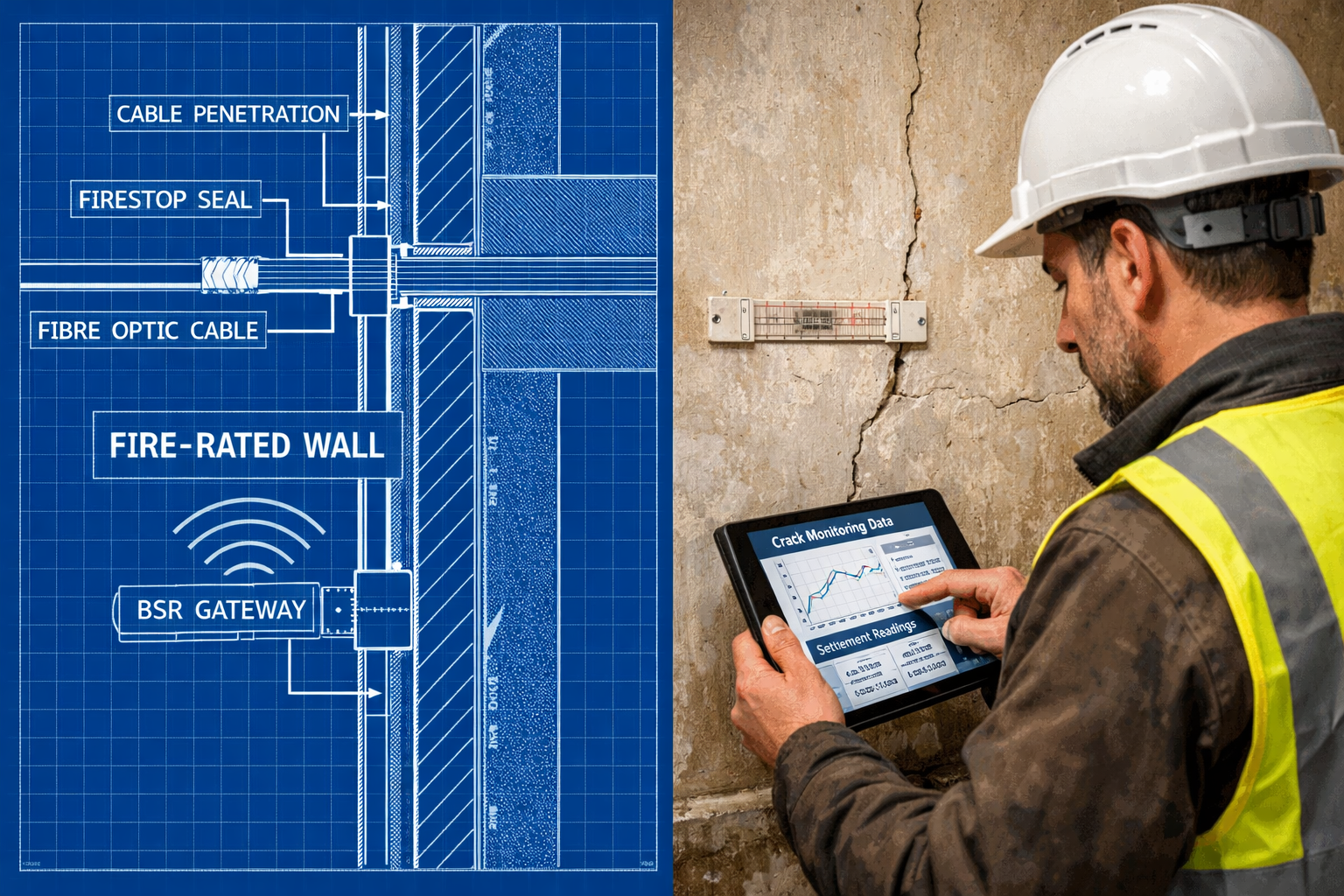
The structural implications of telecoms upgrades are more significant than many assume. A 5G mast mounted on a Victorian terrace parapet wall introduces dynamic wind loading that the original structure was never designed to accommodate. Fibre optic cables drilled through fire-resisting walls create penetrations that, if not properly fire-stopped, compromise compartmentation — a life-safety issue, not merely a cosmetic one.
The 2026 Regulatory Landscape: What Has Changed?
In January 2026, the UK government launched a formal consultation on streamlining building control procedures for telecommunications work [2]. The consultation — which closed on 24 March 2026 — proposed significant changes to how higher-risk buildings (HRBs) handle telecoms installations [2].
Key proposals included:
- Allowing fibre optic drilling through internal fire-resisting walls to proceed without Building Safety Regulator (BSR) gateway 2 approval — a significant procedural simplification [2]
- Maintaining the full HRB regime for any work involving external walls, where fire spread risk is higher [2]
- Creating clearer dispensation pathways for the installation and repair of mobile communications masts on HRBs [2]
⚠️ Important: Even where BSR gateway approval is dispensed with, this does not remove the obligation to conduct a structural impact assessment or serve party wall notices. Regulatory simplification applies to building control procedures — not to neighbour rights or structural safety obligations.
For buildings that fall under the HRB definition (generally residential buildings over 18 metres or 7 storeys), the residential structural engineers in London service provides the specialist structural analysis that sits alongside a Level 3 survey.
Structural Impact Assessment: What It Must Cover
A structural impact assessment for telecoms upgrades — commissioned alongside or following a Level 3 Building Survey — should address:
- Load analysis — Does the existing structure have sufficient capacity to carry the additional dead and dynamic loads from mast equipment?
- Wall penetration assessment — Are proposed drilling locations clear of structural elements, reinforcement, and services?
- Fire compartmentation — How will penetrations be fire-stopped to maintain the original fire resistance rating?
- Vibration and fatigue — Will ongoing vibration from telecoms equipment cause progressive structural fatigue?
- Waterproofing integrity — Do external penetrations maintain the building envelope's weather resistance?
- Foundation proximity — For ground-mounted equipment, does installation fall within the notifiable zone under the Party Wall Act?
5G Mast Installations: A Special Case 📡
Rooftop 5G installations present a particular combination of challenges. The mast itself may require a party wall excavation notice if any ground-level foundations are involved near a boundary. The cable runs from rooftop to street level will typically penetrate multiple floor slabs and walls. And the rooftop fixings must be assessed for their impact on waterproofing membranes and roof structures.
A roof survey conducted alongside the Level 3 assessment provides the detailed rooftop condition data that informs safe mast installation design.
The 340% increase in party wall disputes related to telecoms infrastructure since 2024 [1] reflects a pattern where network operators move quickly to meet rollout targets, and structural and legal due diligence is compressed or skipped. The result is damage claims, injunctions, and costly remediation that a proper Level 3 survey and party wall process would have prevented.
Level 3 Building Surveys for Fibre Optic and 5G Upgrades: Commissioning the Right Expertise
Who Should Commission the Survey?
The answer depends on the role of the party involved:
| Party | Recommended Action |
|---|---|
| Building owner / landlord | Commission a Level 3 survey before consenting to telecoms work; serve or receive party wall notices |
| Adjoining owner / neighbour | Appoint own party wall surveyor; request Schedule of Condition before work starts |
| Network operator / telecoms contractor | Engage structural engineer for impact assessment; ensure party wall compliance before drilling |
| Freeholder of a block | Commission Level 3 survey of common parts; review lease obligations regarding alterations |
| Property buyer | Commission Level 3 survey to identify any existing telecoms-related structural issues |
RICS Guidelines and Quality Standards
RICS-regulated surveyors conducting Level 3 assessments in 2026 are operating under updated quality standards that place greater emphasis on identifying risks from modern infrastructure upgrades [3]. This includes explicit guidance on documenting telecoms-related penetrations, assessing fire compartmentation integrity, and flagging where specialist structural engineering input is required.
The What Is a Schedule of Condition Report guide explains how condition documentation integrates with the broader survey process — a particularly useful resource for those navigating telecoms-related party wall procedures for the first time.
Common Mistakes to Avoid 🚫
- Starting work without serving notice — Even where the telecoms operator holds statutory rights under the Electronic Communications Code, Party Wall Act obligations still apply to the building owner.
- Relying on a Level 1 or Level 2 survey for a property where telecoms upgrades are planned — the limited scope of lower-level surveys will miss structural vulnerabilities.
- Assuming BSR dispensations remove all regulatory obligations — The 2026 consultation proposals simplify building control gateway procedures, not structural safety or neighbour rights [2].
- Failing to fire-stop penetrations — This is a life-safety issue that a Level 3 survey will flag but that requires specialist remediation.
- Not documenting pre-existing damage — Without a Schedule of Condition, resolving post-work damage claims becomes a word-against-word dispute.
Conclusion: Protecting Your Property in the 5G Era
The convergence of rapid telecoms infrastructure expansion and complex UK property law has created a landscape where professional survey expertise is not a luxury — it is a legal and financial necessity. Level 3 Building Surveys for Fibre Optic and 5G Upgrades: Party Wall Agreements and Structural Impact Assessments represent the gold standard of due diligence for any property affected by network upgrade works.
Actionable Next Steps ✅
- Before consenting to any telecoms work on your property, commission a Level 3 Building Survey from a RICS-regulated surveyor to establish the structural baseline.
- Serve or respond to Party Wall Act notices promptly — engage a qualified party wall surveyor to protect your legal rights.
- Commission a Schedule of Condition before work begins, creating a documented record that protects all parties.
- Request a structural impact assessment from a chartered structural engineer for any mast installation or significant wall penetration work.
- Stay informed on the 2026 regulatory changes — the government's consultation outcomes will affect building control procedures for telecoms work in higher-risk buildings.
- If disputes arise, engage experienced party wall surveyors early — resolution through the Act's formal process is significantly less costly than litigation.
The 5G rollout and full-fibre broadband expansion will continue to accelerate through 2026 and beyond. Properties that have the right surveys, notices, and assessments in place will be protected. Those that do not face structural damage, legal disputes, and diminished property values.
References
[1] Party Wall Surveys For 5g Mast Installations Rics Protocols Amid 2026 Telecom Infrastructure Expansion – https://nottinghillsurveyors.com/blog/party-wall-surveys-for-5g-mast-installations-rics-protocols-amid-2026-telecom-infrastructure-expansion
[2] Streamlining Building Control For Telecoms Key Takeaways From The Governments Consultation – https://www.bclplaw.com/en-US/events-insights-news/streamlining-building-control-for-telecoms-key-takeaways-from-the-governments-consultation.html
[3] Building Survey Quality Standards 2026 Navigating Rics Updates And Enhanced Home Inspection Requirements – https://nottinghillsurveyors.com/blog/building-survey-quality-standards-2026-navigating-rics-updates-and-enhanced-home-inspection-requirements
[4] What Does A Level 3 Survey Include 2025 – https://surveymatch.co.uk/what-does-a-level-3-survey-include-2025/