Zero. That is the number defining the UK housing market this autumn. Not a crash, not a rally, just a flat line at £298,441, the second month running that growth has stalled nationally. For anyone watching the Lloyds House Price Index September 2026 Kingston upon Thames figures land on 7 October 2026, the message is clear: the market is holding its breath ahead of the Budget, and south-west London is feeling the mortgage squeeze more than most.
This article breaks down what the latest index actually says, why Kingston upon Thames, Surbiton, New Malden and Norbiton are particularly exposed to today's higher borrowing costs, and what practical steps buyers and sellers should take while the market sits still.
Key Takeaways
- The Lloyds House Price Index September 2026 Kingston upon Thames report shows the UK average house price unchanged at £298,441, with 0.0% monthly and annual growth.
- This follows a -0.3% fall in August 2026, and the quarterly change is -0.2%, confirming a stalled, not falling, market.
- Northern Ireland leads annual growth at 7.4%, while southern England, including London and the South East, remains the weakest region through 2026.
- Average two- and five-year fixed mortgage rates sit near 6%, against a Bank of England Base Rate of 3.75%, keeping affordability tight in higher-priced areas like Kingston upon Thames.
- Buyers and sellers alike are acting cautiously ahead of the Autumn Budget on 28 October 2026, which is widely expected to include first-time buyer support.
What the Lloyds House Price Index September 2026 Kingston upon Thames Report Shows
The Lloyds House Price Index, formerly known as the Halifax House Price Index before its rebrand in July 2026 (the methodology is unchanged), was published on 7 October 2026. It reported the UK average house price at £298,441, with no movement month-on-month and no annual growth at all. That 0.0% annual figure follows a -0.3% monthly fall in August 2026, and the quarterly change now stands at -0.2%.
Regionally, the picture is uneven. Northern Ireland recorded the strongest annual growth in the UK at 7.4%, continuing to outpace every other nation and region. By contrast, southern England, including London and the South East, has been the weakest part of the market throughout 2026. Lloyds has not published specific percentage figures for London or the South East in this release, but the direction is consistent: the capital and its commuter belt, including Kingston upon Thames, are lagging the national trend rather than leading it.
Andrew Asaam, Mortgages Director at Lloyds, said prices were unchanged in September following the August fall, and that property prices have proved resilient despite higher mortgage rates. He added that new enquiries from prospective buyers are now at their highest level since February 2026, a sign of underlying demand even as transactions remain cautious. Asaam expects future price movements to stay modest and dependent on consumer confidence amid ongoing cost-of-living pressures.
For context on how Kingston's own market has been reacting to interest rate decisions this year, see our recent coverage of the Kingston property market and the Bank of England rate hold.
What a Flat Market Actually Means in Practice
A 0.0% annual change sounds dramatic in headlines but is, in practical terms, a market in a holding pattern. It means:
- Sellers are not losing money on paper, but they are not gaining any either.
- Buyers have slightly more negotiating room than during the fast-rising years, because competition for individual properties has eased.
- Transactions take longer to agree, as both sides wait for clarity on rates and the Budget.
- Price discovery is harder, asking prices and achieved prices can diverge more than usual in a flat market.
It's worth noting that Nationwide's separate index, published earlier this month, told a slightly different story, reporting annual growth slowing to 0.8% in September rather than flatlining entirely. The two indices use different methodologies and sample sizes, which is a normal source of divergence, but both point in the same broad direction: growth has essentially stopped.
Lloyds vs Nationwide: Comparing September 2026 Headline Figures
| Metric | Lloyds House Price Index | Nationwide House Price Index |
|---|---|---|
| Publication date | 7 October 2026 | Earlier in October 2026 |
| UK average price | £298,441 | Not stated in this release |
| Annual growth | 0.0% | 0.8% |
| Monthly change | 0.0% (after -0.3% in August) | Not stated in this release |
| Quarterly change | -0.2% | Not stated in this release |
| Strongest region | Northern Ireland, 7.4% annual growth | Not stated in this release |
The takeaway for homeowners is simple: whichever index you follow, the UK market has clearly lost momentum, and southern England is doing most of the dragging.
Why Kingston upon Thames and South-West London Feel the Mortgage Squeeze More
Kingston upon Thames, along with KT1, KT2, Surbiton, New Malden and Norbiton, sits firmly within southern England's higher-priced property bracket. That matters because the pain of elevated mortgage rates scales with loan size. With average two- and five-year fixed mortgage rates close to 6%, against a Bank of England Base Rate of 3.75%, the monthly repayment difference on a larger south-west London mortgage is far greater in cash terms than on a typically priced home elsewhere in the country.

Mark Harris of SPF Private Clients has warned that borrowers coming off fixed deals arranged when rates were around 1% face a significant payment shock when they remortgage at today's levels. In a borough where loan sizes tend to be above the national average, that shock is magnified. Amy Reynolds of Antony Roberts estate agency has pointed out that borrowing costs, rather than a lack of buyer interest, are now the main brake on affordability in this part of London.
This is consistent with Lloyds' regional data showing southern England as the weakest performer through 2026. Higher base prices mean higher absolute mortgage payments at any given interest rate, which naturally dampens demand and price growth relative to lower-priced regions like Northern Ireland. For a deeper look at how local buyer sentiment has shifted since the Bank of England's recent rate decision, read our analysis of the Kingston property market's reaction to the BoE rate hold.
What Buyers Should Do in a Flat Market
A flat national index, combined with high mortgage rates, creates a specific set of opportunities and risks for anyone buying in Kingston upon Thames right now.
1. Negotiate harder on price. With new buyer enquiries rising but transactions still cautious, sellers in a flat market are generally more open to offers below asking price than they were during the fast-growth years.
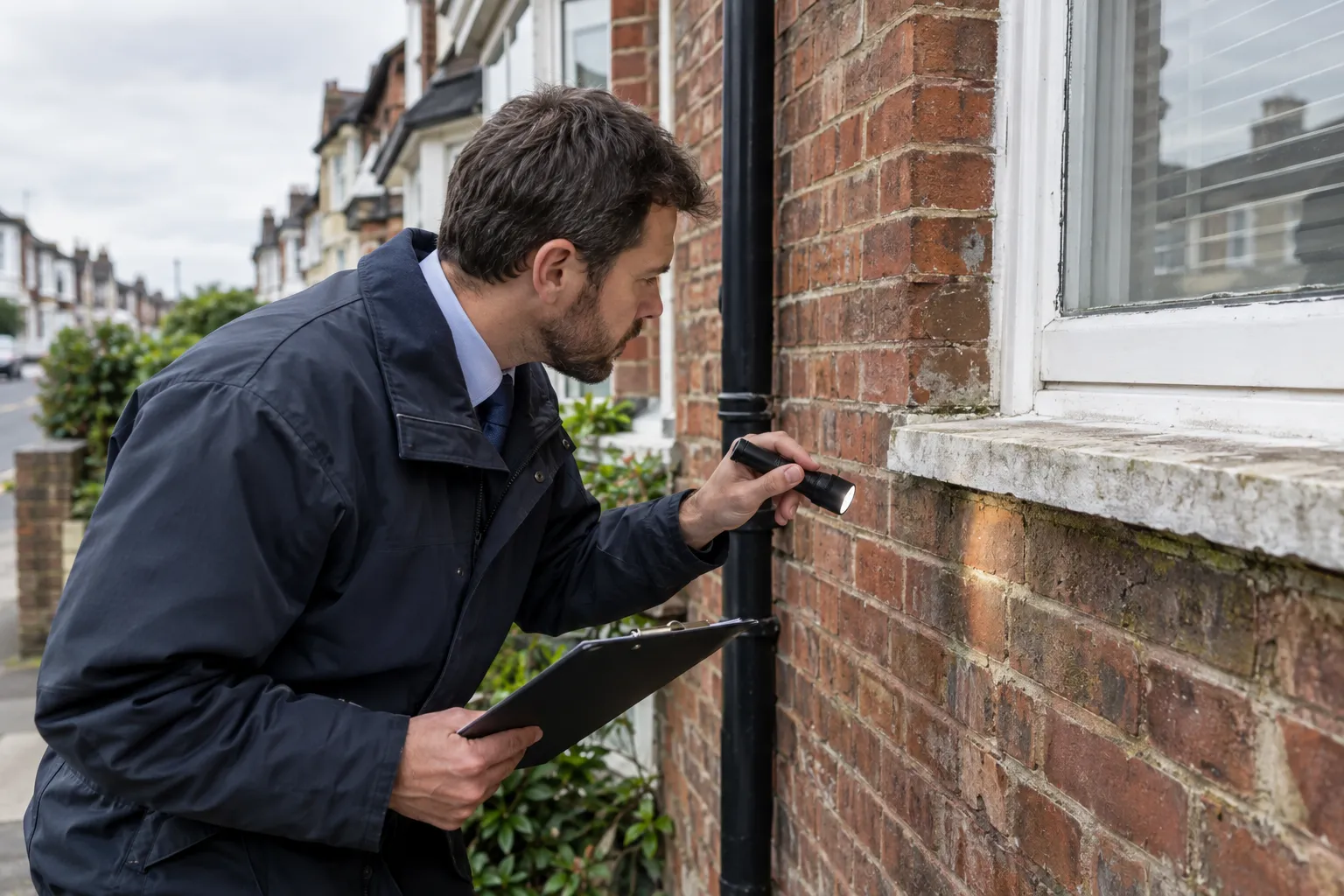
2. Commission a proper survey before you commit. A RICS Level 2 HomeBuyer Report or a Level 3 Building Survey can uncover defects, damp, roof issues, subsidence signs, that give you genuine grounds to renegotiate the price or ask the seller to fix problems before completion. See our checklist for house surveys in London and our guide to choosing between a Building Survey and a Valuation Survey for the right level of inspection.
3. Lock in your mortgage offer early. With rates near 6% and lenders pricing in elevated rates for longer, securing a mortgage offer as soon as possible protects you against further rate movements while your purchase progresses.
4. Budget for a remortgage shock down the line. If you are buying now on a fixed deal, plan ahead for what your repayments will look like when that fix ends, given Mark Harris's warning about borrowers coming off historically low rates.
If you're unsure who arranges the survey during a purchase, our guide on who organises the survey when buying a house explains the process step by step.
What Sellers Should Do Now
Sellers in Kingston upon Thames and the surrounding KT postcodes need to be realistic given the flat national backdrop and weaker southern England trend.
- Price realistically from day one. Overpricing in a flat market tends to lead to stale listings and bigger eventual reductions.
- Get a pre-sale survey. Commissioning your own RICS Level 3 Building Survey before listing lets you fix or disclose issues upfront, reducing the chance of a buyer using a defect to renegotiate late in the process.
- Be transparent about known defects. Addressing issues like damp or cracking proactively, rather than letting a buyer's surveyor find them, keeps deals on track. Our overview of the ten most common property defects found in London surveys is a useful starting point.
- Expect longer timelines. With buyers cautious ahead of the Budget, allow extra time for offers to firm up.
Outlook: The Autumn Budget and the Next Lloyds House Price Index
The Autumn Budget, due on 28 October 2026, is the next major event that could move the market in either direction. It is already creating caution among both buyers and sellers, with first-time buyer support widely anticipated. Any confirmed measures could lift the buyer enquiries that Andrew Asaam says are already at their highest level since February 2026.
Lloyds itself expects future price movements to remain modest and dependent on consumer confidence amid continuing cost-of-living pressures. The next Lloyds House Price Index release, covering October 2026, will be the first opportunity to see whether Budget announcements have shifted sentiment in southern England specifically, and in higher-priced markets like Kingston upon Thames more broadly.
Frequently Asked Questions
What is the current UK average house price according to Lloyds?
As of 7 October 2026, the Lloyds House Price Index puts the UK average house price at £298,441, unchanged from the previous month.
Why did the Halifax House Price Index become the Lloyds House Price Index?
The index was rebranded from the Halifax House Price Index to the Lloyds House Price Index in July 2026. The methodology behind the figures is unchanged.
Is Kingston upon Thames cheaper or more expensive to buy in right now?
Lloyds has not published a specific Kingston upon Thames figure, but southern England, which includes London and the South East, has been the weakest-performing region through 2026, while higher average prices in the area mean mortgage rate rises have a larger cash impact than in cheaper regions.
Should I get a survey if the market is flat?
Yes. In a flat market, a RICS HomeBuyer or Building Survey can reveal defects that support price negotiation, which is especially valuable when sellers are more willing to engage on price. Our guide on how much a structural survey costs can help with budgeting.
Why are mortgage rates still near 6% when the Base Rate is 3.75%?
Lenders are pricing in the expectation that rates will stay elevated for longer, which keeps fixed mortgage pricing above the Base Rate itself.
When is the next housing market update expected?
The next Lloyds House Price Index release will follow in November 2026, shortly after the Autumn Budget on 28 October 2026, and should show whether Budget measures have affected buyer confidence.
Conclusion
The Lloyds House Price Index September 2026 Kingston upon Thames picture is one of a national market holding steady at £298,441 while southern England, including the Kingston area, continues to underperform against regions like Northern Ireland. High mortgage rates, not a lack of interest, remain the key brake on local affordability.
For buyers, this is a moment to negotiate confidently, commission a thorough RICS survey, and lock in mortgage offers early. For sellers, realistic pricing and a pre-sale survey are the smartest ways to keep a deal on track. Whichever side of the transaction you're on, speaking to a local RICS chartered surveyor before the Autumn Budget on 28 October 2026 is a sensible next step. Kingston Surveyors offers Level 2 HomeBuyer Reports and Level 3 Building Surveys across KT1, KT2, Surbiton, New Malden and Norbiton, explore our full range of chartered surveyor services in Kingston to get started.
LANGUAGE: en