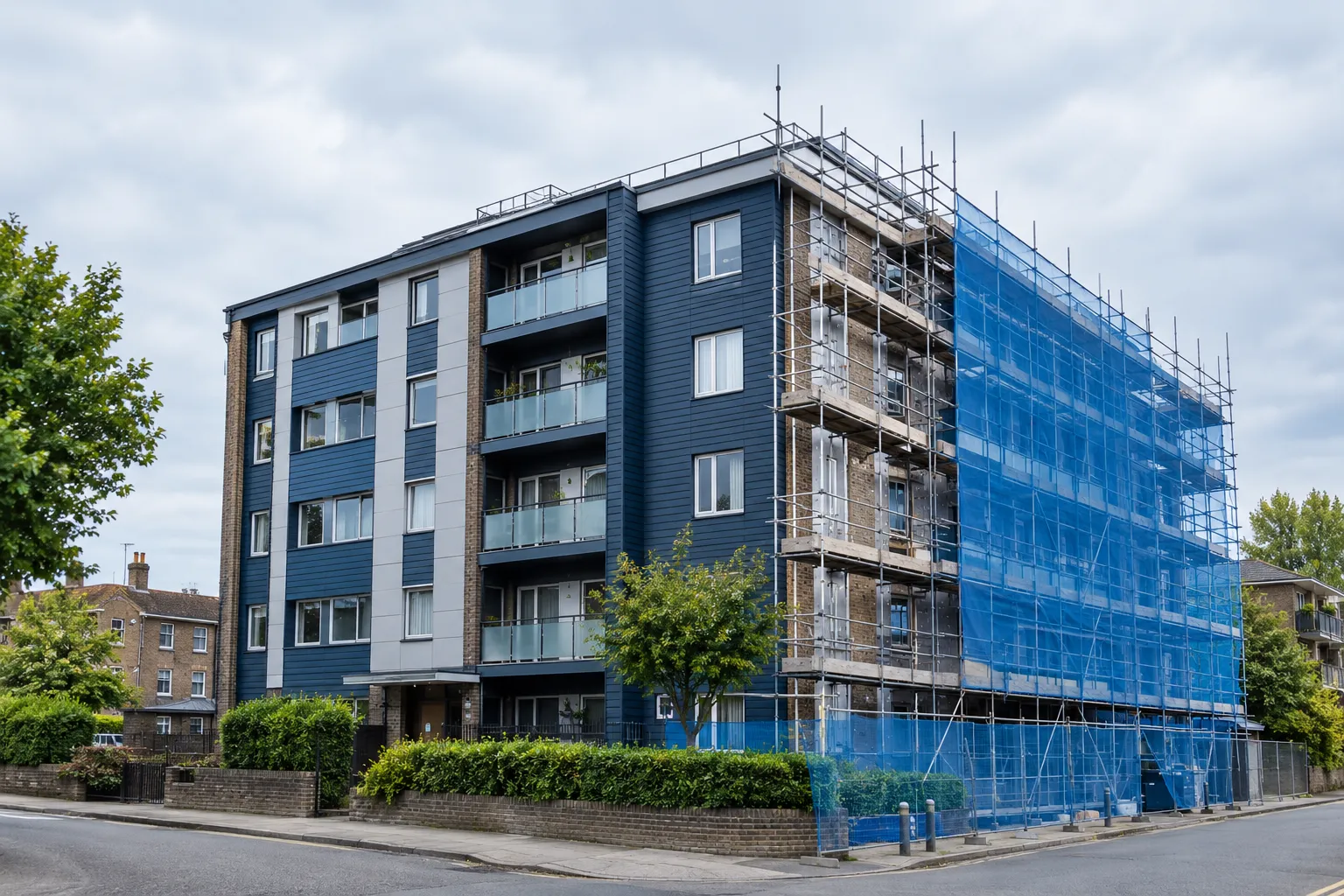
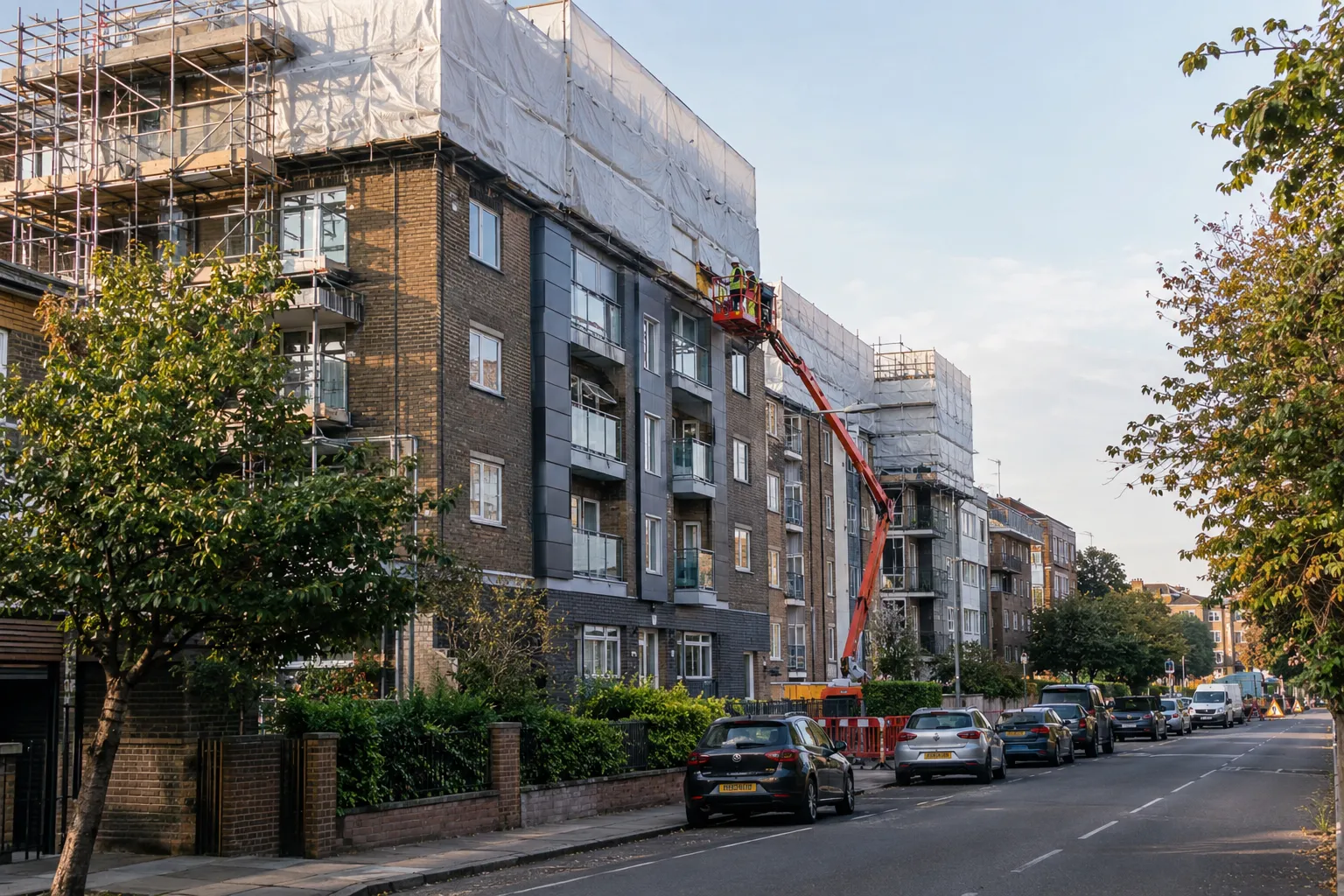
Four thousand, seven hundred and twenty-four buildings. That is the number of residential blocks across England still officially flagged with unsafe cladding at the end of August 2026, and the backlog of buildings waiting for repair work has grown 12% this year even as completions speed up. For anyone trying to buy, sell or remortgage a flat in a mid-rise block in Kingston, Surbiton or New Malden, that single statistic has very real consequences for mortgage offers, legal packs and completion dates.
This article unpacks what the cladding remediation backlog August 2026 flat buyers Kingston upon Thames data actually means on the ground, and what questions you should be asking before you exchange contracts.
Key Takeaways
- MHCLG's August 2026 data shows 4,724 buildings in England identified with unsafe cladding, with 46% of them not yet started on remediation.
- Mid-rise blocks of 11-18 metres are remediating far more slowly (46% started or completed) than taller 18m+ towers (62%).
- Trade press reporting on 1 October 2026 confirms the national backlog has grown 12% in 2026 despite a 22.2% rise in completions, with Building Safety Regulator approvals averaging around 33 weeks.
- The new Building Safety Levy, effective 1 October 2026, will raise money for remediation but will not itself clear the queue of applications and approvals.
- Buyers and lenders in KT postcodes should expect EWS1 requests, Deed of Certificate checks and longer transaction timelines on qualifying blocks.
The MHCLG August 2026 Figures, Explained
MHCLG's Building Safety Remediation monthly release, covering data to the end of August 2026 and published in late September 2026, is the most reliable national yardstick for how the remediation programme is progressing. It confirmed 4,724 residential buildings of 11 metres or more in England have unsafe cladding, 27 more than at the end of July 2026. Since October 2023, 927 additional buildings have been added to the list as surveys continue, and MHCLG itself estimates the 4,724 identified so far represent only 65-81% of the buildings that will ultimately need work.
| Measure | Figure |
|---|---|
| Buildings identified with unsafe cladding | 4,724 (up 27 on July 2026) |
| Remediation completed | 1,849 buildings (39%) |
| Started or completed | 2,571 buildings (54%) |
| Not yet started | 2,153 buildings (46%) |
| 18m+ buildings started or completed | 62% |
| 11-18m buildings started or completed | 46% |
| Additional buildings identified since Oct 2023 | 927 |
| Estimated share of total eventual need identified | 65-81% |
The pattern that matters most for Kingston buyers is the gap between tall towers and mid-rise blocks. Taller buildings over 18 metres have had regulatory attention and funding routes for longer, so 62% have started or finished. Buildings between 11 and 18 metres, the height band that covers a large share of purpose-built flats around Kingston town centre, Surbiton and New Malden, sit at just 46%. These mid-rise blocks are, in effect, the slow lane of the national programme.
Why the Backlog Is Growing Even as Completions Rise
Trade press coverage on 1 October 2026, drawing on Property Inspect analysis reported by The Negotiator, found that the backlog of buildings awaiting remedial cladding work has jumped 12% this year, even though completions rose by 22.2% over the same period. The explanation lies in process, not just funding: Building Safety Regulator approvals are currently taking around 33 weeks on average, creating a bottleneck between a building being surveyed and work actually starting on site.
Siân Hemming-Metcalfe, Operations Director at Property Inspect, put it plainly: "Money alone will not clear the backlog." That comment matters for leaseholders hoping the new levy will instantly fix delays, it will not, on its own, speed up approvals or contractor availability.
The Building Safety Levy and What It Funds
From 1 October 2026, England's new Building Safety Levy applies to building-control applications submitted from that date. It is charged per square metre of new residential floorspace, with developments of fewer than 10 dwellings exempt and a halved rate on previously developed land. The levy is expected to raise around £3.5 billion over ten years, channelled into remediation funding. It will not retrospectively affect existing leases or current remediation schemes in Kingston's existing blocks, but it signals that government funding for the long tail of the backlog is being secured for the next decade, useful context when a managing agent cites "funding uncertainty" as a reason for delay.
Grenfell Prosecutions: A Reminder the Issue Remains Live
The Metropolitan Police has now passed 20 files to the Crown Prosecution Service relating to the Grenfell Tower fire, naming 20 companies and organisations and 54 individuals. Charging decisions are expected before the tenth anniversary of the fire on 14 June 2027. While this does not directly affect Kingston transactions, it underlines why external wall safety remains a central legal and reputational issue across the construction and property sectors, and why lenders continue to ask probing questions on affected buildings.
EWS1 Forms: When Kingston Lenders Still Ask
The EWS1 form, produced by a qualified fire engineer, not a residential surveyor, confirms whether a block's external wall system presents an unacceptable fire risk. Most mainstream lenders no longer demand EWS1 for low-rise flats, but they frequently still request one for buildings over 18 metres, for blocks with significant cladding or balcony systems, or where a RICS survey flags visible concerns. Given 11-18m blocks are furthest behind nationally, expect lenders financing flats in this band around Kingston and Surbiton to ask for an EWS1, a completed remediation certificate, or confirmation the building falls under statutory leaseholder protections.
PAS 9980 Fire Risk Appraisals and the RICS Survey Boundary
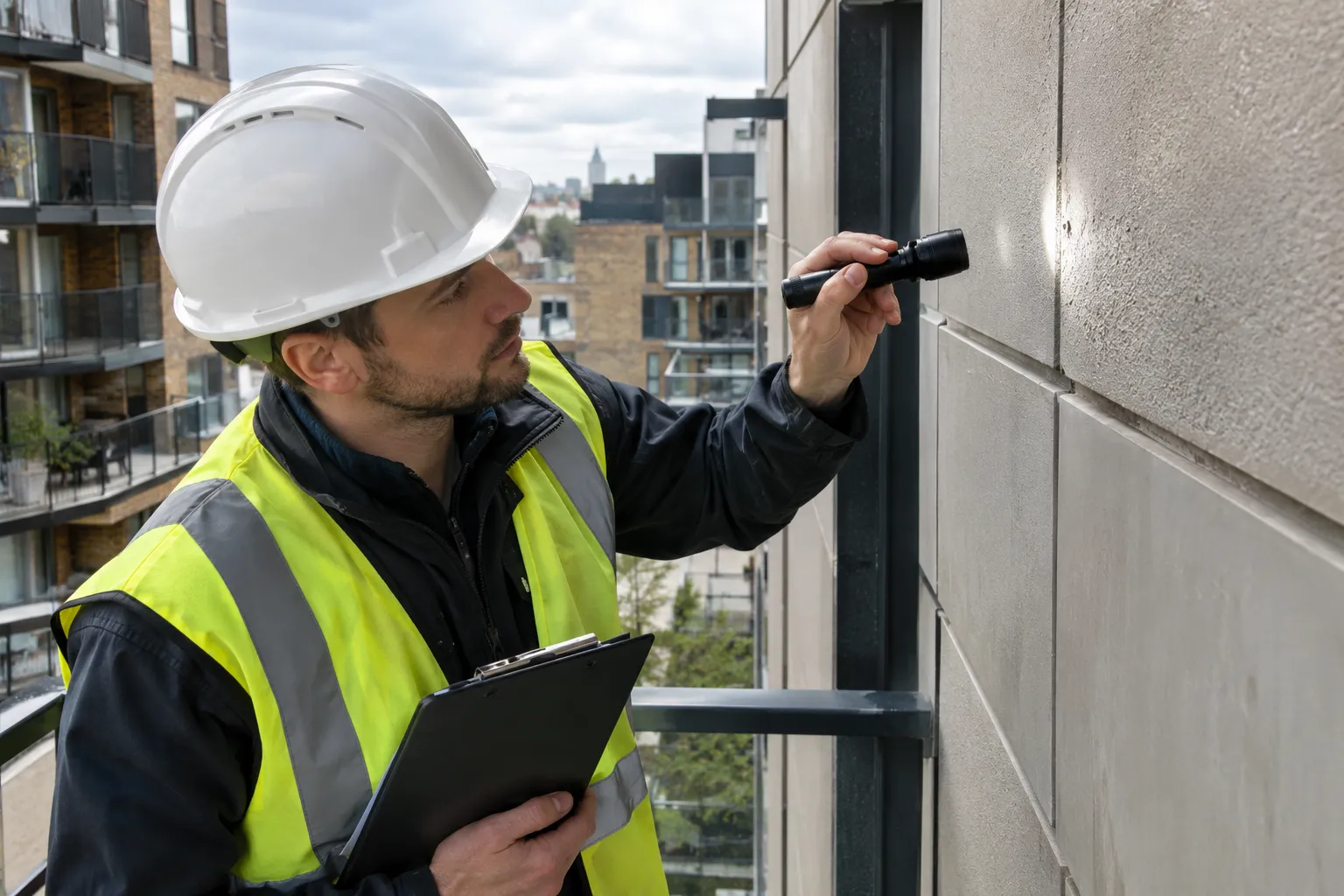
A PAS 9980 Fire Risk Appraisal of External Walls (FRAEW) is a specialist assessment, carried out by a qualified fire engineer, that considers the whole external wall build-up, compartmentation and escape routes. This is distinct from a RICS Level 2 (HomeBuyer) or Level 3 (Building Survey) inspection of an individual flat. A chartered surveyor reports on what is visible, render condition, balcony fixings, visible panel types, and will recommend further investigation of the external wall system where concerns arise, but does not certify fire safety. For more detail on how these reports differ in scope and depth, see our comparison of building survey versus valuation survey options, and our guide to what a building survey costs against a standard valuation fee.
Leaseholder Protections and the Deed of Certificate
Under the Building Safety Act 2022, qualifying leaseholders benefit from a statutory cap on non-cladding remediation costs, and freeholders must obtain a signed Leaseholder Deed of Certificate confirming qualifying status, alongside a Landlord's Certificate setting out the building's remediation costs and funding position. Buyers in Kingston should ask the seller's solicitor to produce both documents before exchange. Where remediation costs are disputed or unresolved, this can materially affect how a surveyor adjusts their opinion of value, a topic covered in our analysis of how valuers adjust market value for serious defects.
Questions to Ask the Managing Agent Before Exchange
- Has the building been assessed under PAS 9980, and is a FRAEW report available to view?
- Is an EWS1 form in place, and what rating was given?
- Has a Leaseholder Deed of Certificate and Landlord's Certificate been completed for this building?
- What stage is remediation at, not started, started, or completed, and is there a date for Building Safety Regulator approval?
- Are there interim fire safety measures (waking watch, alarm upgrades) and associated service charge costs?
- If remediation funding is still being arranged, how is the building safety levy or developer contribution scheme relevant here?
What This Means for Kingston, Surbiton and New Malden Transactions
Given the national context, buyers and lenders should expect: longer conveyancing timelines where cladding paperwork is incomplete, more detailed EWS1 and certificate requests on 11-18m blocks, and continued caution from some lenders pending Building Safety Regulator approval. This sits alongside wider local market dynamics, for context on how Kingston's sales market is behaving this autumn, see our recent coverage of Kingston's property market reaction to interest rates. Where a lender will not accept a desktop or remote valuation on an affected block, a physical inspection becomes essential, our guide to when lenders accept desktop versus physical valuations explains the distinction. Leaseholders weighing up remediation costs against extending their lease should also read our breakdown of current lease extension costs.
Frequently Asked Questions
Does every flat in Kingston need an EWS1 form?
No. Most low-rise flats are exempt. Lenders typically request EWS1 for buildings over 18 metres, or mid-rise blocks with cladding, balconies or specific construction types flagged by a surveyor.
Can a residential surveyor confirm a building is fire safe?
No. A RICS Level 2 or Level 3 survey reports on visible condition and will recommend further investigation by a fire engineer where the external wall system raises concerns. Only a qualified fire engineer can produce a PAS 9980 FRAEW or sign an EWS1.
What is a Leaseholder Deed of Certificate?
A statutory document under the Building Safety Act 2022 that confirms a leaseholder's qualifying status for cost protections, submitted alongside the freeholder's Landlord's Certificate.
Why are 11-18 metre blocks taking longer to remediate?
National data shows only 46% of buildings in this height band have started or completed remediation, against 62% for taller towers, reflecting funding routes and regulatory prioritisation that favoured taller buildings earlier in the programme.
Will the new Building Safety Levy speed up my transaction?
Not directly. It funds remediation over the next decade but does not reduce the roughly 33-week average wait for Building Safety Regulator approvals that is driving the current backlog.
Conclusion
The cladding remediation backlog August 2026 flat buyers Kingston upon Thames situation is not improving uniformly, completions are rising, but so is the queue, and mid-rise blocks common across KT postcodes remain the slowest-moving segment. Buyers, sellers and landlords should treat EWS1 status, PAS 9980 findings and Building Safety Act certificates as essential pre-exchange documents, not afterthoughts. If you are buying, selling or remortgaging a flat in a cladding-affected building in Kingston, Surbiton or New Malden, speak to Kingston Surveyors, your local RICS chartered surveying team, before you commit. Our Kingston-based chartered surveyors can scope a Level 2 or Level 3 survey correctly and point you to the right fire safety specialist where further investigation is needed.