A house price net balance of minus 32 sounds abstract until you realise it is the weakest reading most Kingston agents have seen since the survey began tracking this cycle. That is the headline from the RICS September 2026 survey Kingston house prices data, published on 8 October 2026, and it confirms what many sellers across south-west London have already sensed on the viewing room floor: the market has turned decisively in buyers' favour.
This article, written on 18 October 2026, unpacks what the latest RICS figures, ONS data and mortgage market trends actually mean for anyone buying, selling or holding a property in Kingston upon Thames right now.
Key Takeaways
- The RICS September 2026 survey Kingston house prices net balance fell to -32%, down from -28% in August, signalling broad-based price falls across London and the wider South East.
- New instructions to sell turned positive (+6%) for the first time in months, even as buyer enquiries dropped to -22%, a classic buyers' market combination.
- ONS data shows London's average house price has now fallen year-on-year for eleven consecutive months, down 3.3% to £569,000 in July 2026.
- Mortgage rates have climbed back above 6% on five-year fixes for the first time in nearly three years, squeezing affordability for movers and first-time buyers alike.
- Sellers need evidence-based pricing and buyers have genuine negotiating leverage, particularly once a Level 2 or Level 3 survey has been carried out.
RICS September 2026 Survey Kingston House Prices: The Headline Numbers
The RICS UK Residential Market Survey for September 2026 paints a market losing momentum quickly. New buyer enquiries recorded a net balance of -22%, worse than August's restated -18%. Agreed sales slipped to -18%, down from -16% the previous month. Most strikingly, the house price net balance fell to -32%, a sharp deterioration from -28% in August.
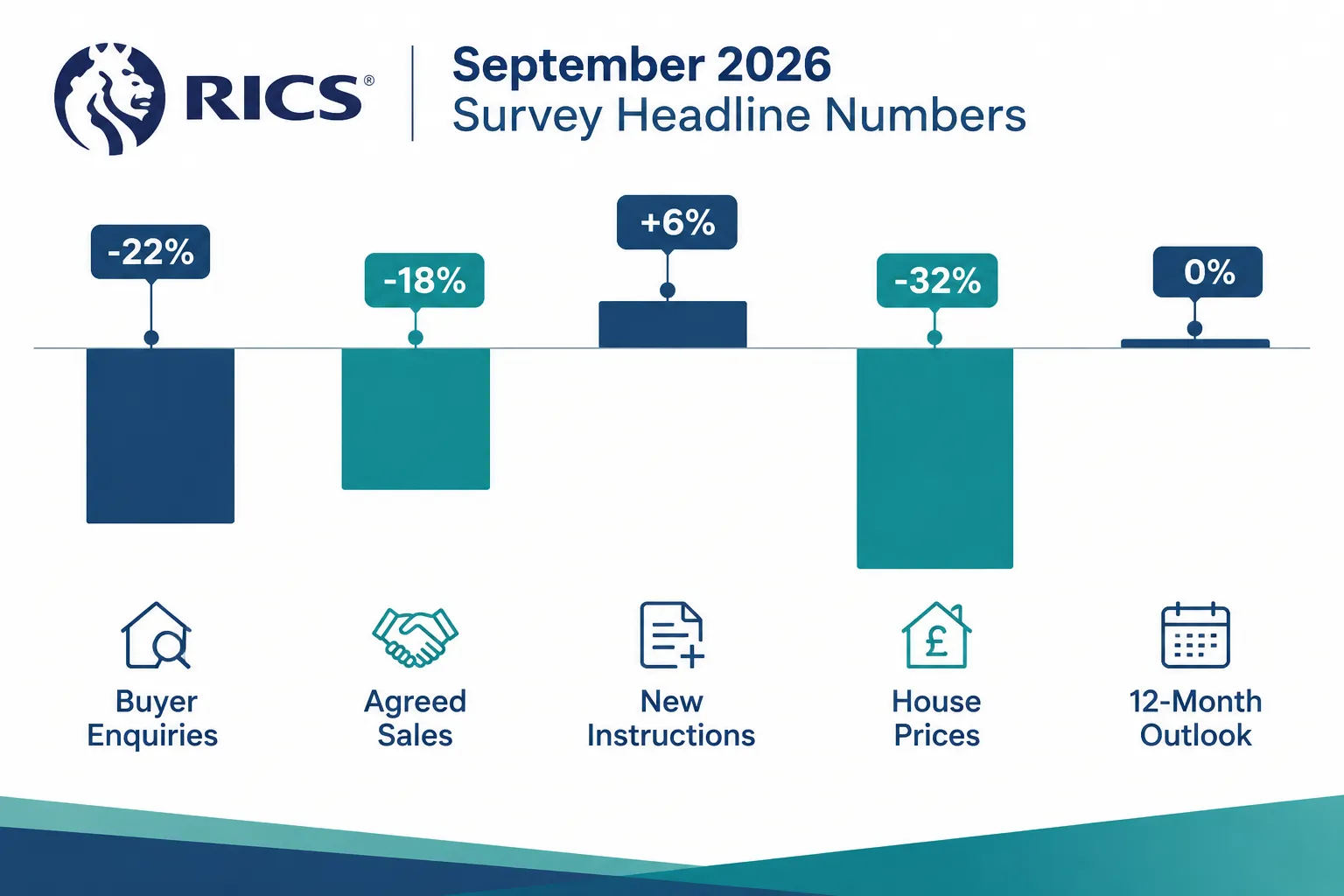
At the same time, new instructions to sell rose to +6%, the first positive reading in months. That combination, more homes coming to market while fewer buyers come forward, is the textbook definition of a buyers' market, and RICS noted that London was notably weaker than the UK average.
Tarrant Parsons, RICS Head of Market Research and Analysis, said a renewed rise in interest rate expectations had created a fresh headwind for the sector. Looking ahead, surveyors' expectations for the next three months point to sales down -6% and prices down -24%, though the 12-month price outlook is flat at 0%, suggesting surveyors expect the current downturn to bottom out rather than spiral further.
| RICS Indicator | August 2026 | September 2026 |
|---|---|---|
| New buyer enquiries | -18% | -22% |
| Agreed sales | -16% | -18% |
| New instructions | 0% | +6% |
| House prices | -28% | -32% |
| 3-month price expectations | n/a | -24% |
| 12-month price expectations | n/a | 0% |
Source: RICS UK Residential Market Survey, September 2026, published 8 October 2026.
Lloyds data cited alongside the RICS release reinforces the regional split: London prices are down 1.5% over the year, while the North West is up 3.1%. For anyone tracking the RICS September 2026 survey Kingston house prices story, the message is clear, this is a London-specific squeeze, not a nationwide collapse.
What the RICS September 2026 Survey Means for Kingston Sellers
For sellers, the combination of rising instructions and falling demand means competition for buyer attention has intensified sharply. Rightmove data via Tembo shows average viewings per property fell to just 1.7 in August, compared with nearly four two years earlier. Perhaps most tellingly, 86% of estate agents now report properties selling below asking price.
This is not the market to test with an ambitious asking price in the hope of "seeing what happens." An overpriced Kingston property in this climate risks sitting unsold for months while fresher, realistically priced competitors attract the limited pool of active buyers. An evidence-based valuation, grounded in recent comparable sales rather than wishful thinking, is now essential. For homeowners weighing up their options, our recent coverage of Rightmove asking prices and what they mean for Kingston sellers and the buyer reaction to the Bank of England rate hold provide useful local context alongside this national dataset.
A professional, independent valuation also matters because RICS registered valuers now have to account for a market where prices are moving quickly in one direction. Our guide to desktop house valuation and the comparison of Red Book valuation versus desktop estimates explain how different valuation methods suit different circumstances.
Buyers and the RICS September 2026 Survey Kingston House Prices Data
For buyers, the current environment hands back some of the leverage lost during the pandemic boom years. Falling prices, more stock and weaker demand mean negotiation is not just acceptable, it is increasingly expected.
The survey itself is one tool, but the real leverage often comes after an offer is accepted. A Level 2 or Level 3 building survey frequently uncovers issues that justify renegotiating the agreed price, from damp and roof defects to structural movement. Buyers who skip this step, or rely solely on a lender's mortgage valuation, risk overpaying in a market where prices are already falling. Our comparison of Level 2 versus Level 3 surveys and the explainer on who organises the survey when buying a house are useful starting points.
There is also a growing risk of down-valuations. In a falling London market, mortgage valuers may assess a property below the agreed sale price, forcing buyers to renegotiate, find extra deposit funds, or walk away. This is precisely why relying only on a mortgage valuation rather than a full building survey can leave buyers exposed, a lender's figure protects the lender's interests, not the buyer's.
Mortgage Rates, Rents and the Wider Picture
Affordability pressure sits behind much of this slowdown. According to Rightmove data via Tembo, the average two-year fixed mortgage rate reached 5.97% and five-year fixes hit 5.99%, briefly passing 6% in early October for the first time in nearly three years. The Bank of England base rate stands at 3.75%, with markets pricing in the possibility of a further rise in November.
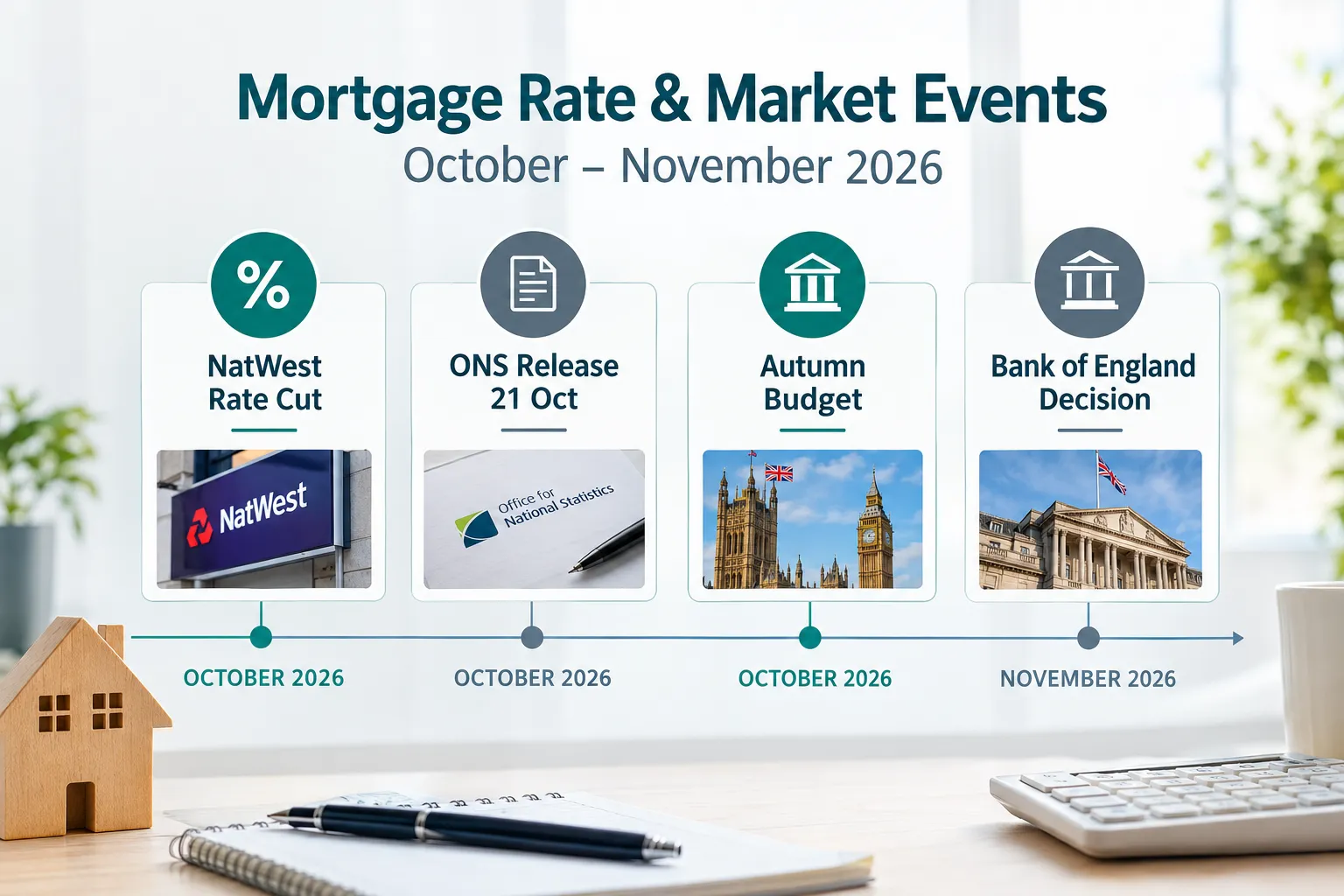
There has been some relief: NatWest cut selected deals to 5.04% on two-year fixes and 4.98% on five-year fixes from 15 October, with HSBC also announcing reductions. Even so, Yorkshire Building Society reported 97,732 home-mover mortgage applications between 29 June and 27 September 2026, down 10.2% year on year, with first-time buyer applications down 3.5%. Max Shepherd of Yorkshire Building Society described this as a reflection of rising interest rates dampening affordability.
Rental demand tells a different story. RICS recorded tenant demand at +23% and three-month rent expectations at +37%, suggesting the rental market remains firm even as sales activity cools, a pattern consistent with would-be buyers delaying purchases and staying in rented accommodation for longer.
ONS figures published on 16 September 2026 confirm the London price slide in cash terms: the average London house price was £569,000 in July 2026, down 3.3% year on year and £19,000 below the July 2025 peak, marking eleven consecutive months of annual decline. The UK average, by contrast, rose 1.4% to £273,000, underlining how concentrated this downturn is in the capital.
What to Watch Next
Several dates in the coming weeks could shift sentiment further. The next ONS house price release lands on 21 October 2026, offering an updated read on London values. The Autumn Budget on 28 October 2026 could influence buyer and investor confidence depending on any property-related announcements. The Bank of England's November decision is also being watched closely, given markets are already pricing in a possible rate rise.
For homeowners considering structural or condition issues ahead of a sale, understanding typical defects can help set realistic expectations with buyers. Our overview of the ten most common property defects found in London surveys and the checklist for house surveys in London are both worth reviewing before marketing a property in this climate.
Frequently Asked Questions
What does a -32% RICS house price balance actually mean?
It means 32% more surveyors reported falling prices in their local area than reported rising prices. It is a sentiment measure, not a precise percentage price fall, but a reading this negative points to widespread, broad-based price weakness.
Is Kingston following the national trend or the London trend?
RICS specifically noted London was notably weaker than the UK average in September 2026. Kingston, as part of south-west London, is more closely aligned with the London figures, including the ONS-reported 3.3% annual fall, than the national 1.4% rise.
Should Kingston sellers lower their asking price now?
With 86% of agents reporting sales below asking price and instructions rising faster than demand, realistic, evidence-based pricing from the outset is more likely to achieve a timely sale than an optimistic asking price that invites months of reductions.
Can buyers renegotiate after a survey in this market?
Yes. With prices falling and buyer leverage increasing, defects identified in a Level 2 or Level 3 survey are a legitimate and increasingly common basis for renegotiating the agreed price or requesting a seller contribution towards repairs.
Why might a mortgage valuation come in below the agreed price?
In a falling market, valuers must reflect current conditions rather than recent comparable sales agreed months earlier. This can lead to down-valuations, where the lender's figure sits below the price buyer and seller agreed.
What should I watch for next in the Kingston market?
The ONS house price release on 21 October 2026, the Autumn Budget on 28 October, and the Bank of England's November rate decision are all likely to influence buyer confidence and mortgage pricing over the coming weeks.
Conclusion
The RICS September 2026 survey Kingston house prices data confirms that south-west London has entered a genuine buyers' market: more stock, fewer buyers, falling prices and widening negotiating room. Sellers who price realistically from day one, backed by solid comparable evidence, stand the best chance of a smooth sale. Buyers, meanwhile, have real leverage, particularly once a professional survey has identified issues worth negotiating over. Anyone navigating a sale or purchase in Kingston this autumn should keep a close eye on the ONS release on 21 October, the Budget on 28 October, and the Bank of England's November decision, all of which could reshape the picture again before the year is out.