Thursday 5 November 2026 could mark the first Bank Rate increase since August 2023. If the Monetary Policy Committee votes as markets expect, borrowing costs in Kingston upon Thames and across south-west London are about to get noticeably more expensive, right as lenders are already pulling deals in an average of just 16 days.
That combination, a looming rate rise and a jumpy mortgage market, is exactly why the Bank of England interest rate rise November 2026 mortgage valuations Kingston story matters to anyone buying, selling or remortgaging locally this month.
Key Takeaways
- The Bank of England's MPC announces its decision on 5 November 2026; Bank Rate is at 3.75% and a rise to 4% is widely expected.
- CPI inflation hit 3.5% in September 2026, its highest in 11 months, driven by energy and fuel costs.
- Moneyfacts data (4 November 2026) shows average mortgage rates at 5.89%, the highest since November 2023.
- Mortgage approvals fell to 53,400 in September (Bank of England), while remortgage approvals rose to 42,600.
- Nationwide reports UK house prices were flat in October 2026, meaning lender valuations and surveys matter more than ever in Kingston, Surbiton, New Malden and Norbiton.
Why the Bank of England Interest Rate Rise November 2026 Mortgage Valuations Kingston Story Is Unfolding Now
Inflation has been the trigger. The Office for National Statistics data cited by the Bank shows CPI inflation rose to 3.5% in September 2026, the highest reading in 11 months, pushed up by energy and fuel prices linked to the Middle East conflict. Ofgem's energy price cap rose 3.6% on 1 October and is forecast to climb a further 22% in January, adding more inflationary pressure into the new year.
At the Bank's September MPC meeting, three of nine members already voted for a rate rise. With Bank Rate currently at 3.75%, markets widely expect a quarter-point increase to 4% on 5 November, which would be the first rise since August 2023.
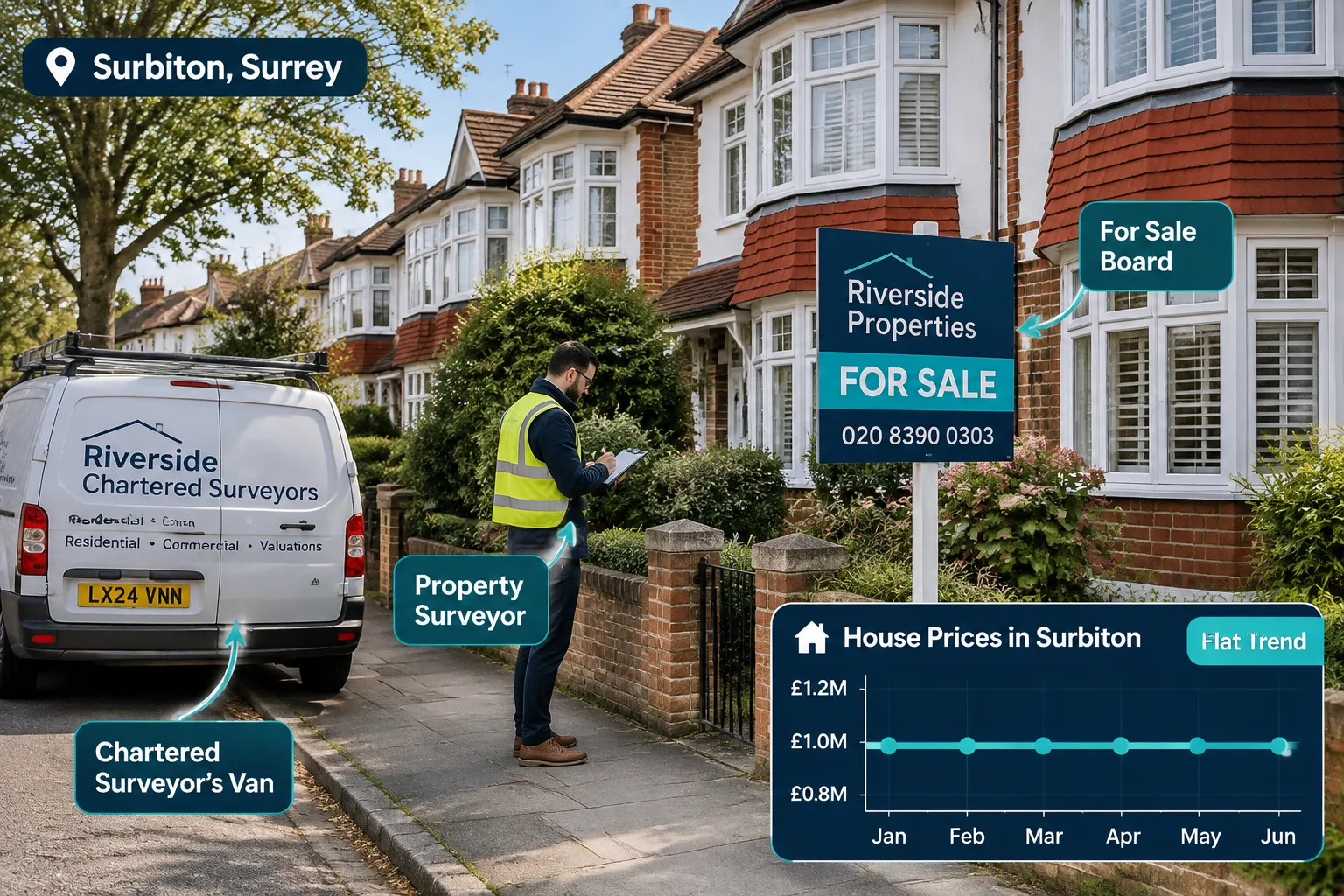
For Kingston upon Thames, Surbiton, New Malden and Norbiton homeowners, this isn't abstract. It directly affects mortgage pricing, lender appetite, and how valuers assess property on the ground.
How a Rate Rise Hits Mortgage Costs and Valuations
Moneyfacts data reported on 4 November 2026 shows the average mortgage rate has risen to 5.89%, up from 5.83% a month earlier, the highest level since November 2023. The average two-year fix has climbed from 4.83% in January to 5.97%, and average five-year fixed rates have now passed 6%, up from 4.91% in January. Moneyfacts estimates a homeowner refixing today could pay roughly £170 more a month than they would have in January.
Rachel Springall of Moneyfacts summed up the risk bluntly: delaying a new deal is "already coming back to haunt borrowers."
Lenders are also moving faster to withdraw products, pulling deals after an average of just 16 days, compared with 43 days back in 2019. UK Finance estimates around 2.3 million households will reach the end of their fixed deals in 2027, meaning many will refinance into a materially higher-rate environment.
Summary of Key Figures
| Metric | Figure | Source |
|---|---|---|
| Current Bank Rate | 3.75% (expected rise to 4%) | Bank of England |
| CPI inflation, September 2026 | 3.5% | ONS/Bank of England |
| Average mortgage rate | 5.89% (up from 5.83%) | Moneyfacts |
| Average 5-year fix | Over 6% (from 4.91% in Jan) | Moneyfacts |
| Mortgage approvals, September | 53,400 (lowest since Dec 2023) | Bank of England |
| Remortgage approvals, September | 42,600 (up from 34,000) | Bank of England |
| UK house price growth, October | 0.5% annual, average £273,566 | Nationwide |
Why Lender Valuations Are at Greater Risk of Down-Valuation
When mortgage rates rise and approvals fall, Bank of England figures show house purchase approvals dropped to 53,400 in September 2026, the lowest since December 2023, transaction volumes thin out. Fewer completed sales mean valuers have less fresh comparable evidence to rely on, and in a flat market like the one Nationwide describes (annual growth of just 0.5%, the weakest since January 2024), that evidence can soften quickly.
This raises the risk of down-valuations: a lender's valuer assessing a Kingston or New Malden property below the agreed purchase price, based on cautious or outdated comparables. Our detailed explanation of how surveyor reports influence mortgage approval and down-valuations covers how lenders instruct valuers and what happens when figures don't match the agreed price.
Strengthening Your Position With an Independent Survey
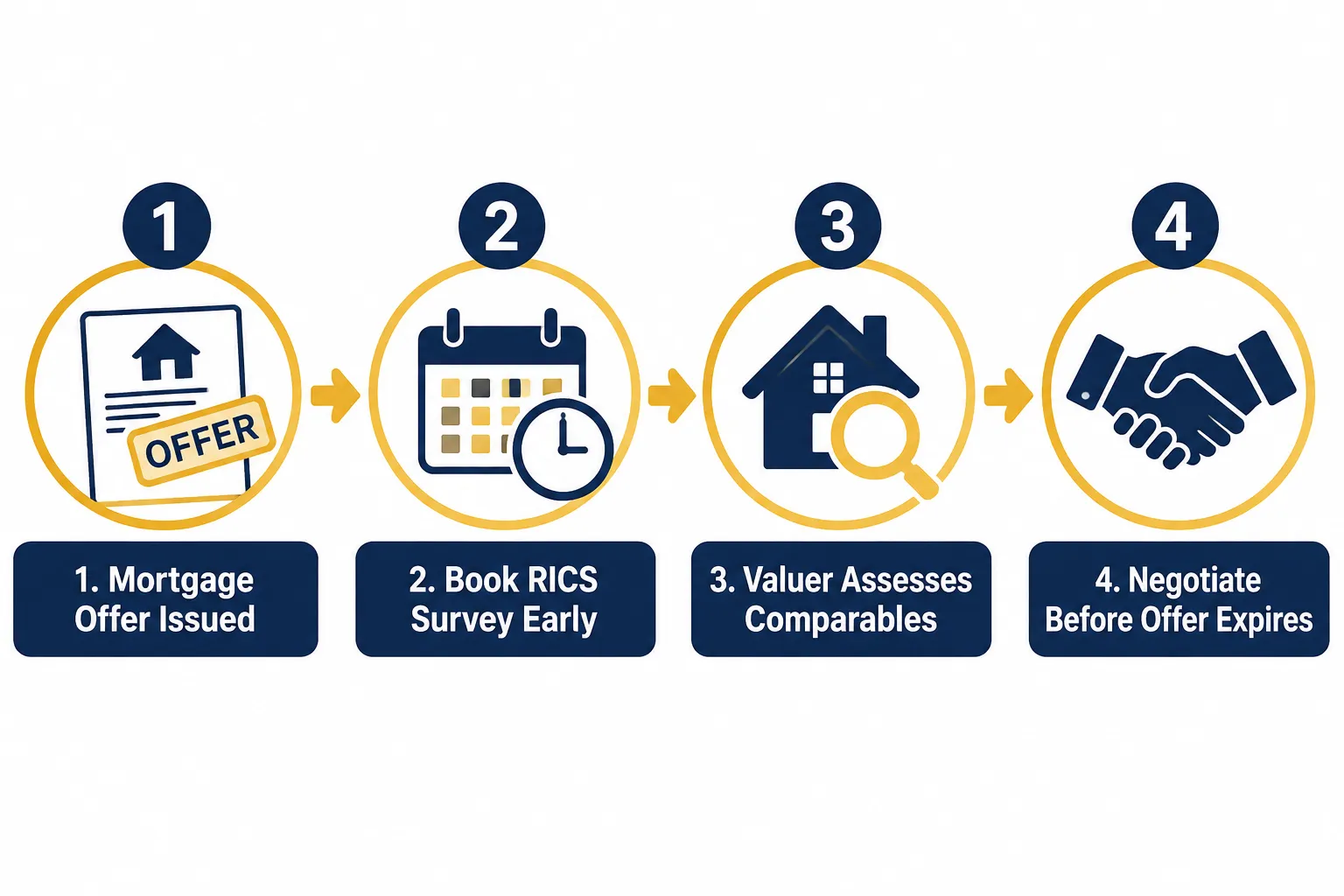
In a market where comparable evidence is thinning, buyers and sellers gain real leverage from independent, RICS-regulated evidence rather than relying solely on the lender's valuation. An RICS Level 2 HomeBuyer Report or a Level 3 Building Survey, alongside an independent valuation, gives a far more detailed picture of condition and value, useful ammunition in price negotiations when a mortgage valuer's figure is conservative.
Our guide comparing a building survey versus a valuation survey explains which report suits different property types, while mortgage valuation versus a full building survey explains why the lender's figure alone is rarely enough protection for buyers in Kingston, Surbiton or Norbiton.
Timing Your Survey Before Mortgage Offers Expire
With lenders pulling products after an average of just 16 days, timing is now critical. Buyers should book their survey as soon as an offer is accepted, not after a mortgage offer is issued. Delaying risks running out of time before the mortgage offer's validity period ends, especially if a down-valuation forces renegotiation and a second survey or appeal.
For context on how the wider Kingston market has reacted to recent Bank of England decisions, see our review of the September 2026 rate hold and its effect on SW London buyers, and how national asking prices have moved in our Rightmove September 2026 analysis for Kingston sellers.
What Remortgagers Should Check Right Now
With remortgage approvals rising to 42,600 in September from 34,000 in August (Bank of England), clearly many homeowners are moving early rather than waiting for deals to expire. If you're among the 2.3 million households UK Finance says will reach the end of a fixed deal in 2027, two checks matter most:
- Compare the lender's valuation against genuine market evidence. Nationwide's flat growth figures mean lenders may value conservatively; an independent valuation can confirm whether that figure reflects reality for your Kingston, Surbiton or New Malden property.
- Understand how reinstatement cost differs from market valuation. Insurance and lending figures are calculated differently, see our breakdown of reinstatement cost versus mortgage valuation for clarity.
Those relying purely on a desktop valuation should also check whether their lender will accept one at all in the current climate, our guide to desktop valuation versus physical survey explains when lenders insist on a physical inspection.
FAQ
Will the Bank of England definitely raise rates on 5 November 2026?
Markets widely expect a 0.25-point rise from 3.75% to 4%, but the decision is confirmed only when the MPC announces it on 5 November 2026.
How much more could I pay on my mortgage?
Moneyfacts estimates a homeowner refixing now could pay around £170 more a month compared with January 2026, reflecting the rise in average mortgage rates to 5.89%.
Why are mortgage approvals falling while remortgage approvals rise?
Bank of England data shows house purchase approvals fell to 53,400 in September (lowest since December 2023), while remortgage approvals rose to 42,600, suggesting existing homeowners are moving to secure deals before further rate rises.
Does a flat housing market increase down-valuation risk?
Yes. Nationwide's figures show just 0.5% annual house price growth in October 2026, meaning less robust comparable evidence for valuers, which can increase the chance of cautious lender valuations.
Should I order a survey before or after my mortgage offer is issued?
Book as soon as your offer is accepted. With lenders pulling deals after an average of 16 days, delaying risks your mortgage offer expiring before issues are resolved.
Conclusion
The expected Bank of England interest rate rise in November 2026 adds real pressure to mortgage affordability and valuation accuracy across Kingston upon Thames, Surbiton, New Malden and Norbiton. With mortgage rates at their highest since 2023 and house price growth flat, independent survey and valuation evidence has become essential negotiating leverage for buyers, sellers and remortgagers alike.
Contact Kingston Surveyors today to book an RICS Level 2 HomeBuyer Report, Level 3 Building Survey, or independent valuation before your mortgage offer expires.